AI and Work: Measuring Tasks, Productivity, and Power Without Waiting for AGI
A job is not one task, and exposure is not a layoff. A method for measuring assistance, automation, and how their effects are distributed.
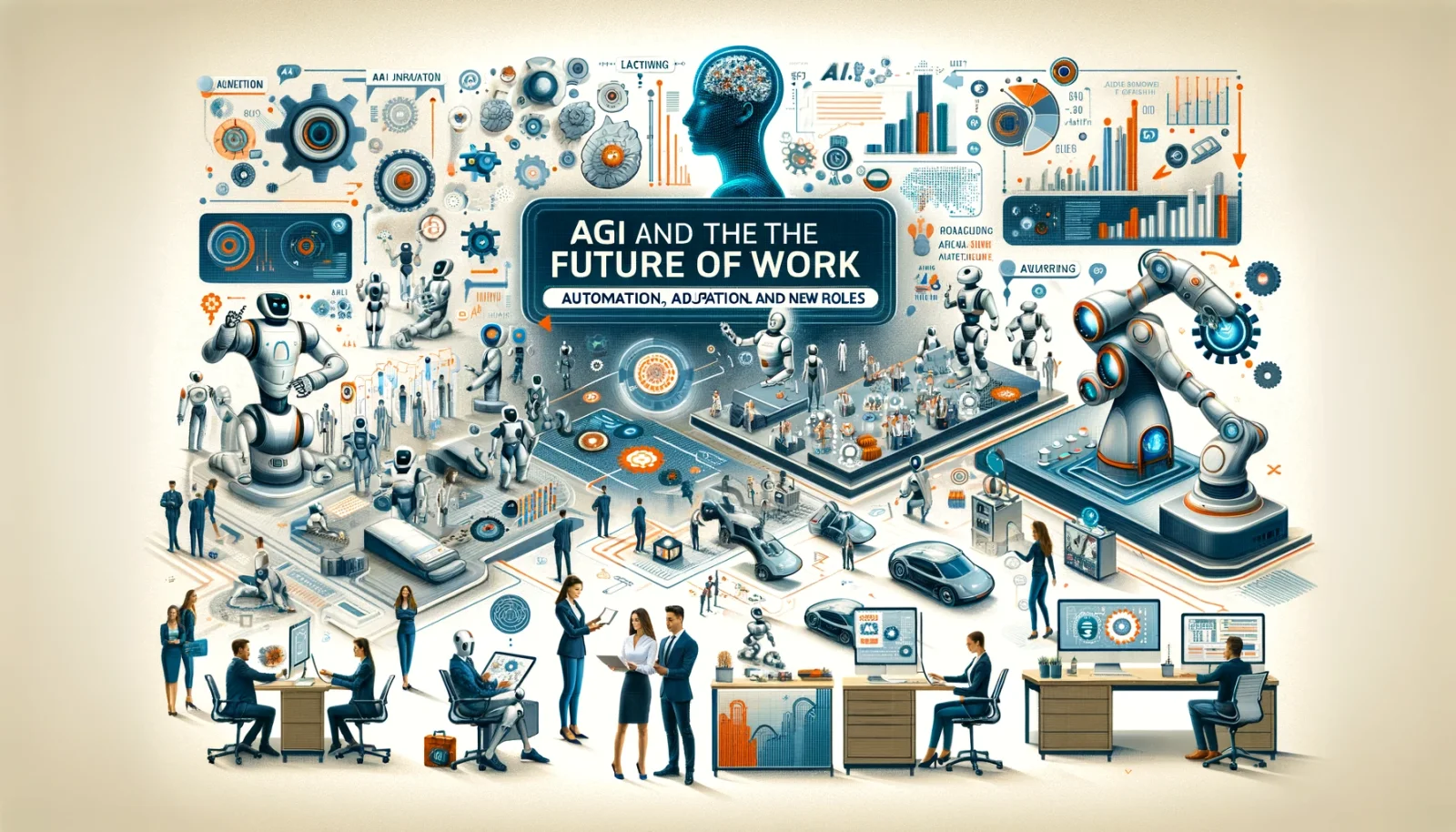
Re-edited on July 30, 2026, this article removes a false premise: there is no need to wait for artificial general intelligence to study how work is changing. Current tools can already draft, classify, search, summarize, or generate code under particular conditions. Their labor impact follows not from the model’s name but from the tasks an organization chooses to automate, assist, create, or leave to people.
A job is not one task, and exposure is not a layoff. Between a technical capability and a labor outcome lie cost, quality, responsibility, demand, organization, training, bargaining, and law. A useful method moves from the aggregate forecast down to the actual workflow and measures who saves time, who corrects errors, and what changes in pay, workload, and control.
From a job title to a task inventory
The same occupation contains different activities. A nurse records data, observes a patient, administers treatment, coordinates people, and responds to exceptions. An analyst gathers documents, cleans data, interprets results, communicates, and assumes responsibility. A tool may affect one part without replacing the whole and may create additional review work.
The official O*NET database publishes task statements associated with occupations and ratings for frequency, importance, and context. It is a starting point rather than a universal photograph: duties vary across firms, countries, and shifts. A local inventory is completed by observing work, interviewing the people who perform it, and recording exceptions, dependencies, and tacit knowledge.
Each task is described through its input, output, quality standard, time, tools, sensitive data, cost of error, and accountable person. A possible change can then be classified as assistance, when AI proposes and a person decides; automation, when the workflow executes without routine review; reconfiguration, when the steps change; or a new task, when verification, integration, or incident response appears.
Exposure measures possibility, not adoption or loss
The ILO’s refined global index, published in May 2025, combines task-level data, surveys, and expert judgment. It estimates that one in four workers is in an occupation with some degree of generative-AI exposure and that 3.3% of global employment falls into the highest exposure category. Clerical occupations remain the most exposed.
Those figures do not say that one in four jobs will disappear. The study expresses technical potential under a classification, and the ILO itself regards transformation as more likely than replacement. A task may be generatable while still requiring undigitized data, expensive verification, physical contact, professional accountability, or an integration that is not worth its cost. Demand can also expand when the price of a service falls.
The IMF discussion note on generative AI and work separates exposure from complementarity: technology may substitute for human activity in some occupations and raise a worker’s productivity in others. Its estimates are scenarios built from assumptions, not counts of layoffs caused by AI. Distribution matters because access, digital readiness, and occupational structure vary across economies and groups.
Experiments observe tasks, not the entire labor market
Generative AI at Work studied a staggered rollout of a conversational assistant among 5,179 customer-support agents. Access increased average productivity, measured as issues resolved per hour, by 14%, with larger benefits for novice and lower-performing workers and minimal effects among the most experienced. The pattern suggests diffusion of practices, but it belongs to one company, one tool, and one metric.
A preregistered experiment by Noy and Zhang assigned professionals writing tasks and randomized access to ChatGPT. On those tasks, the group with access took less time and received higher average grades. The experiment did not measure a complete career, long-term teamwork, factual accuracy across every domain, or the effect when text reaches a real customer.
The GitHub Copilot experiment asked developers to implement an HTTP server in JavaScript: the group with the tool completed the task 55.8% faster. That is causal evidence for a bounded assignment, not a productivity rate for all software engineering or an employment forecast. Maintenance, security, architecture, review, and coordination remain outside that number.
All three studies teach the same caution: preserve the population, task, version, baseline, and metric. A percentage does not travel alone to another firm. A local pilot should measure quality, total time including review, incidents, learning, and heterogeneous effects. If it times only the first output, it may confuse generation speed with final productivity.
Redesigning work requires measures of quality and power
A deployment starts with a pre-adoption baseline and a comparable group. It records volume, time, rework, serious errors, customer satisfaction, cognitive load, and distribution across workers. During the pilot, workers retain the option not to use the tool and corrections are documented. Afterward, the organization asks whether saved time became fewer hours, more output, better service, or simply more demanding targets.
Time horizon changes the answer. A two-week trial can reveal initial friction, but not whether people learn, the model degrades when demand changes, or a firm reduces hiring months later. Follow-up separates immediate and delayed effects and records employment, vacancies, turnover, hours, wages, and promotion. It also compares groups: a positive average can coexist with lost autonomy or income among workers whose former tasks become concentrated in other jobs.
The OECD Employment Outlook 2023 reported surveys of more than 2,000 employers and 5,300 workers in manufacturing and finance across seven countries. It found a mixed picture: perceived benefits for job quality, but concerns about intensification, privacy, bias, and automated decisions. Workers managed by AI tended to assess its impact less positively than those working alongside it.
Participation is therefore not a training session at the end. The people doing the work help select the task, define quality, identify exceptions, and set the route for challenge. It should be clear which data is collected, who evaluates the worker, how a decision can be contested, and what happens when the tool fails. Automation that saves minutes while transferring risk and surveillance to an employee cannot be evaluated through productivity alone.
New roles without guessing future occupations
New roles are derived from a workflow, not a futuristic list. If a system generates drafts, someone defines sources and checks claims. If it operates tools, permissions, traces, and incident response are needed. If it changes with data, someone governs provenance, evaluation, and retirement. Integration, process design, quality control, and worker representation are observable task sets; they may be added to existing jobs or support new ones.
Training is linked to the actual transition. It is not enough to recommend creativity, empathy, or “human skills” as supposedly irreplaceable refuges. A person needs practice with the real tools, a method for verifying their output, and time and authority to correct them. The employer should state which jobs will change, which capabilities it will fund, and what protection is available to someone who loses tasks or income.
A new skill counts only when it can be demonstrated and recognized. A training plan defines a task, supervised practice, a passing criterion, and application during paid working time. It then updates classification, responsibility, and compensation when a job assumes extra verification or risk. Telling workers to “adapt” on their own hides transition costs and allows the organization to capture savings without accounting for who produced the new capability.
The transferable skill is building an impact record: tasks before and after; degree of assistance or automation; evidence on quality and time; distribution of benefits and errors; changes in employment, hours, and wages; and a mechanism for participation and challenge. That record works with or without AGI. The future of work does not arrive as an inevitable property of a machine: it is decided in each redesign, and it can be measured.
This article was produced with artificial intelligence under human editorial oversight.