Emotions and AI: What a Machine That Claims to Read You Actually Measures
A camera that announces whether a candidate is nervous or a student is paying attention does not read emotions: it measures facial movements and calls that an emotion. Behind the gap between those two sentences sit a 68-page scientific review, Microsoft's 2022 product withdrawal, and a European ban in force since 2 February 2025. It is enough to read any claim of this kind.
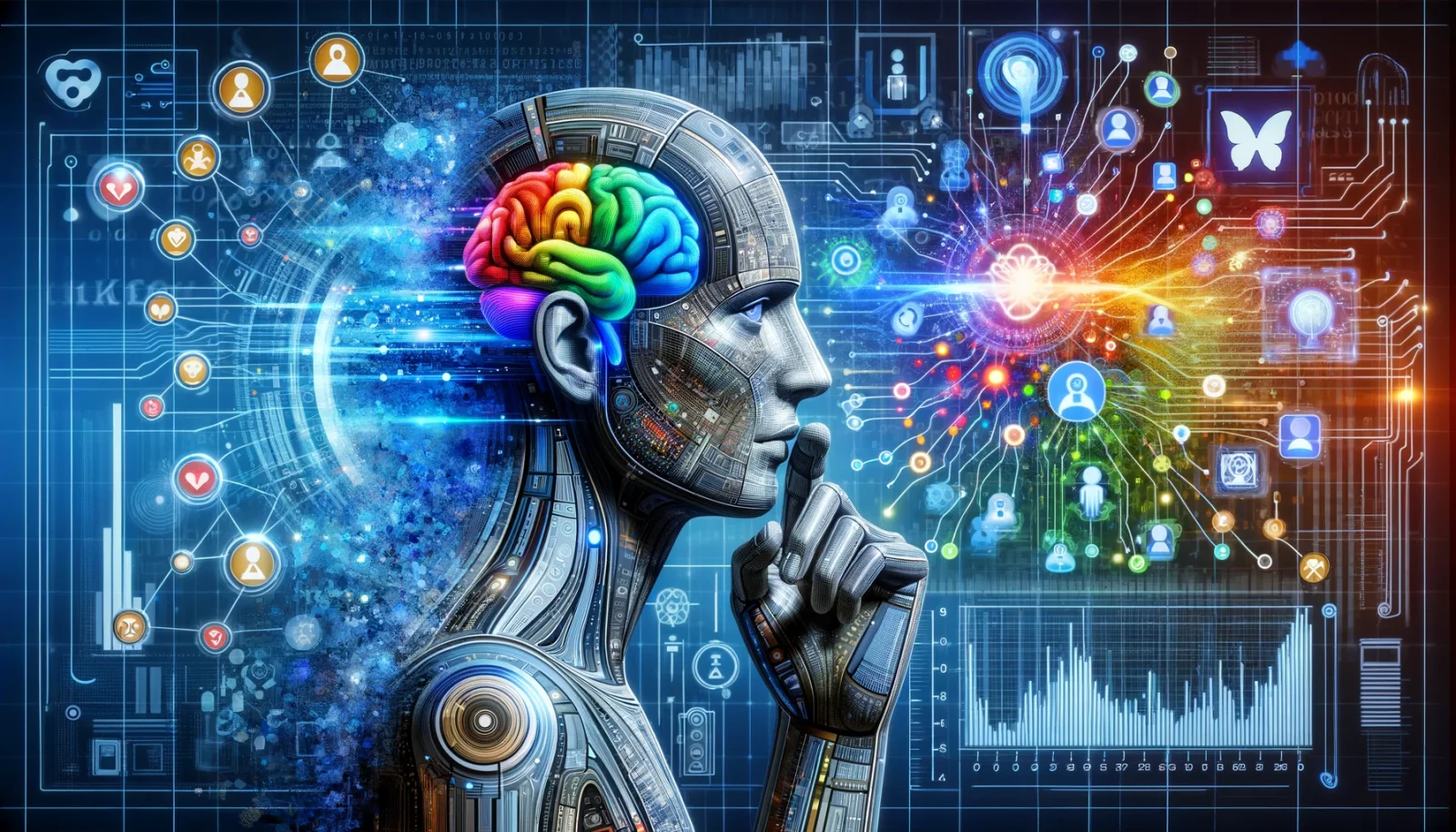
A program watches your face during a job interview and issues a verdict: nervous, unreliable, enthusiastic. Another monitors a classroom and scores each student's attention. A third listens to a customer service call and warns the supervisor that you are angry.
All three perform the same operation, and it is worth naming precisely, because everything else follows from it: they measure a movement — of facial muscles, of vocal tone — and then assert an internal state. Measuring the first is a technical problem solved fairly well. Inferring the second is a leap the scientific evidence does not support, and one that has been illegal in two specific settings across the European Union since 2 February 2025.
This is how we got here, and it is enough to read the next product that promises the same thing.
Where the idea comes from
The starting hypothesis is half a century old and entirely respectable. In work presented at the Nebraska Symposium on Motivation and published in 1972, Paul Ekman opened with exactly the right question: «Does a particular facial expression signify the same emotion for all peoples?». His answer, grounded in cross-cultural fieldwork, was that certain expressions are universal, modulated by cultural rules about when it is appropriate to show them.
From there comes the idea of cataloguing facial movements and mapping them onto emotional states. And from there, decades later, come the products.
The bridge into computing was built by Rosalind Picard at MIT. Her 1995 technical report, still available on the lab's own server, coins the term: affective computing, «computing that relates to, arises from, or deliberately influences emotions».
It is worth reading what Picard says next, because it is more careful than almost everything that followed. On the first page she clarifies that she is not proposing to build emotional computers. The founding text of the field is markedly more cautious than its commercial descendants — a pattern that repeats across the industry and is worth learning to spot.
The review that pulled the floor out
In 2019, five researchers — Lisa Feldman Barrett, Ralph Adolphs, Stacy Marsella, Aleix Martinez and Seth Pollak — published a 68-page review in Psychological Science in the Public Interest titled «Emotional Expressions Reconsidered». It is open access, and it is the centrepiece of this whole subject.
Their conclusion, in their words: «how people communicate anger, disgust, fear, happiness, sadness, and surprise varies substantially across cultures, situations, and even across people within a single situation».
Read it slowly, because each of the three variations kills a different assumption. Variation across cultures invalidates a model trained in one place and deployed in another. Variation across situations invalidates moving a model from the laboratory into a job interview. And variation across people within a single situation invalidates the very idea of a universal gesture-to-emotion map.
A furrowed brow can be anger, concentration, short-sightedness or an annoying light. The system sees a furrowed brow. The rest it supplies itself.
When the vendor withdraws
The industrial consequence came quickly. On 21 June 2022, Sarah Bird, Chief Product Officer for Responsible AI at Microsoft, announced on the official Azure blog: «We will retire facial analysis capabilities that purport to infer emotional states and identity attributes».
The timetable was specific: unavailable to new customers that same day, and until 30 June 2023 for existing ones to stop using them. The reasons the text itself gives are those of the 2019 review: the lack of consensus on a definition of «emotions», and the impossibility of generalizing the expression-emotion link across use cases, regions and demographics.
A company withdrawing a feature it was selling is a rare and highly informative data point. Worth keeping.
When the legislator withdraws it
The next step was regulatory. Regulation (EU) 2024/1689, the European AI Act, prohibits in its Article 5(1)(f) AI systems intended to infer the emotions of a natural person in the workplace and in education institutions. The prohibition has applied since 2 February 2025 and covers both placing on the market and use.
There is one narrow exception: cases where the system is intended for medical or safety reasons. It should not be stretched, because the Commission's guidelines read it strictly — «medical» points to regulated medical devices, not to generic wellness or stress applications.
What is interesting for a non-lawyer is the reasoning. Recital 44 of the Regulation grounds the prohibition in a scientific argument, not a moral one: the limited reliability of such inference, its lack of specificity and its limited generalisability. It is the Barrett review turned into law. A legal text resting on a psychology paper is an uncommon thing, and worth watching work.
The other side: we do the attributing too
There is a symmetry that rarely gets told. While we argue about whether a machine detects emotions, people have spent decades attributing emotions to machines that have none.
The classic case is ELIZA, the conversational program Joseph Weizenbaum wrote at MIT in the mid-sixties, which did little more than rephrase the user's sentences as questions. Weizenbaum recounted in his book Computer Power and Human Reason (1976) that his own secretary, knowing perfectly well it was a program, asked him to leave the room after only a few exchanges so she could continue alone.
A note on rigour: this is Weizenbaum's own testimony, and the academic project ELIZA Archaeology has documented that the episode appears in variant forms between his 1967 account and the 1976 book. It is a founding anecdote, not a controlled experiment, and should be cited as such.
Even with that caveat the phenomenon is real, it has a name — the ELIZA effect — and it carries a practical consequence that matters more now than ever: the warmth you perceive in a system says absolutely nothing about what is inside it. A program that answers kindly understands no better than one that answers curtly. It understands the same amount: none, or whatever it is doing, which is not feeling.
The capability: three questions and one legal fact
1. What does the sensor measure, exactly? Ask for the subject of the sentence. «It detects facial muscle movement» is verifiable. «It detects that you are angry» is an inference stacked on top. Almost always the spec sheet says the first and the brochure says the second.
2. Validated on which population, in which situation? The 2019 review pins down precisely where generalization fails: culture, situation and individual. If the vendor does not say with whom and where it measured, it has left out the three variables that matter.
3. What happens when it is wrong, and who bears it? An error in a music recommendation is an annoyance. The same error in a job interview or a school assessment is a decision about someone's life taken with a measure that does not measure what it claims.
And the legal fact, which in Europe is real leverage: in the workplace and in education institutions, this is prohibited. Not a recommendation, not a voluntary ethics code. If an employer or a school proposes such a system, Article 5(1)(f) of Regulation 2024/1689 is the exact reference to cite.
The deep end, undiluted
All of the above is checkable, and with one exception it is open:
- Barrett, Adolphs, Marsella, Martinez and Pollak (2019), the full review, 68 pages in open access. It is dense and worth the effort.
- Picard (1995), the technical report that founded the field, on MIT's own server.
- Ekman (1972), to read the original thesis the 2019 review reexamines.
- Microsoft (2022), the withdrawal announcement, with its timetable.
- Regulation (EU) 2024/1689 on EUR-Lex, with a language selector: Article 5 and Recital 44 take ten minutes to read.
The capability you leave with: always separate what a system MEASURES from what it ASSERTS. It measures a gesture; it asserts a feeling. Between those two things sit a scientific review documenting that the bridge does not hold, a company that withdrew the product because of it, and an article of law that bans it in two specific places. That is enough never to read «this AI detects emotions» the same way again.
This article was produced with artificial intelligence under human editorial oversight.