Codex adjusts GPT-5.6 context: what changes for long sessions
Codex’s 272,000-token profile is not the model’s total capacity. How to separate window, headroom, compaction and usage when evaluating a long session.
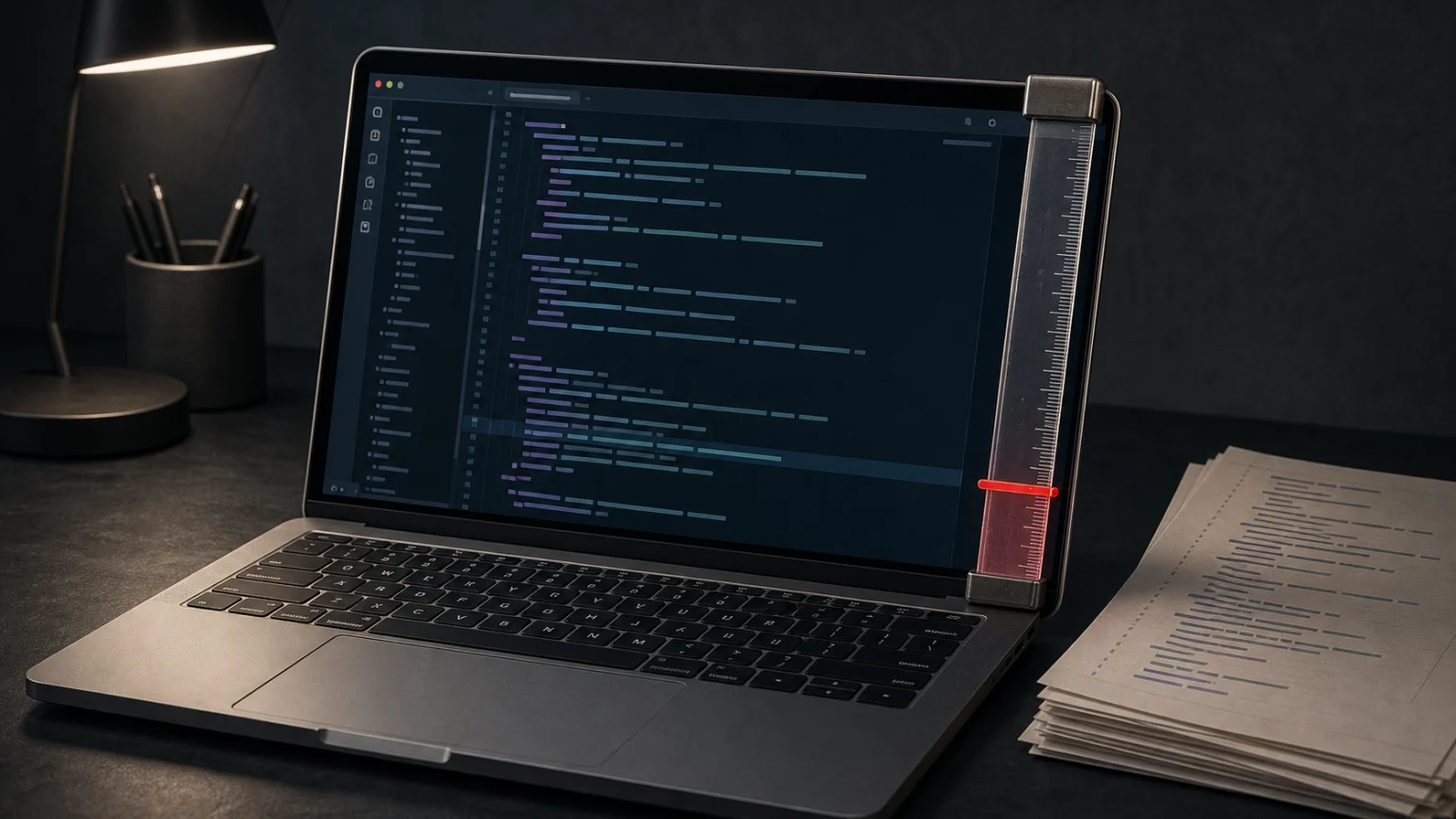
On 18 July 2026, OpenAI merged a hotfix into Codex’s stable 0.144 branch that sets the context and maximum-context fields for GPT-5.6 Sol, Terra and Luna to 272,000 tokens. This did not reduce the models’ intrinsic capability as advertised in the API. It changed the profile through which a particular Codex version manages sessions. To understand what a developer may notice, five numbers must be kept separate: model capacity, product limit, usable headroom, compaction threshold and billed usage.
The distinction matters most in long-running work. A focused fix may never approach the limit. A migration that traverses hundreds of files, runs noisy tests and retains many decisions may fill it. Yet “272,000 tokens” does not by itself reveal when history will be compacted, how much code will fit, or whether quality will decline at a particular point. It labels one layer within a system.
What changed on 18 July
Pull request 34009 in the official Codex repository is titled “Narrow 0.144 hotfix to GPT-5.6 prompts and context.” Its summary bounds the change: retain refreshed instructions for Sol, Terra and Luna; keep context_window and max_context_window at 272,000 for all three; and remove catalogue changes unrelated to the hotfix. It was merged into release/0.144 on 18 July and identifies 0.144.6 as the intended version.
The author also supplied an unusually precise scope check. Relative to the stable reference, the resulting catalogue differed in exactly twelve values. Four fields changed for each model: base instructions, instruction template, context window and maximum context window. That evidence prevents readers from attributing broad improvements in reasoning, speed or accuracy to a patch that did not measure them.
It also blocks a premature causal story. The 272,000 figure matches the threshold above which very long API requests receive different pricing, but the pull request does not explain why the number was chosen or say price caused the decision. A documented coincidence is not a documented explanation. Unless OpenAI publishes its reasoning, the accurate statement is that the catalogue was corrected to that figure and the detailed motive is not stated in the change.
The model and the product do not expose the same window
The official GPT-5.6 Sol API page advertises a 1,050,000-token context window and a 128,000-token maximum output. On the same page, OpenAI says requests with more than 272,000 input tokens are priced at twice the input rate and 1.5 times the output rate for the entire request. Those are model properties and API conditions, not a promise that every Codex surface automatically exposes one million tokens.
Codex adds its own catalogue and reserves. context_window describes the active context allocated by the product; max_context_window limits how far a configuration override may go. A client can select a smaller profile than the underlying model supports for operational, compatibility, usage or behavioural reasons. Without an OpenAI statement, there is no evidence for which factor drove this case.
The official GPT-5.6 help page also confirms that experience depends on surface and plan. In Codex, Terra is available to Free and Go users, while Sol, Terra and Luna appear on eligible paid plans; the minimum CLI version is 0.144.0. Context, availability and allowance are separate axes. Access to a model does not guarantee a particular window, and a larger window does not grant additional messages or credits.
Context is not literal memory
A token is a unit of processed text, not a line of code or a constant number of words. The budget includes system instructions, AGENTS.md, messages, file excerpts, terminal results, tool responses and any reasoning the product needs to retain. Two sessions changing the same number of files can consume very different amounts if one prints a huge build log and the other filters the decisive error.
The catalogue figure is also not usually an amount that should be exhausted. Codex needs room for instructions, tool calls and the next output. The model-metadata type in the official source distinguishes context_window, max_context_window and auto_compact_token_limit. Its comments explain that when no compaction threshold is supplied, core derives one from the window, and that a configured value is clamped to preserve headroom. “Maximum window” and “time to compact” are therefore not synonyms.
Nor is there a universal cliff at which the model remembers everything through token 271,999 and forgets the next one. Relevance can deteriorate when important decisions are buried among repeated outputs. The Codex manual calls this context pollution or context rot: even with large windows, flooding the main thread with exploration, traces and logs can make a session less reliable. Available capacity and quality of attention are connected problems, but they are not identical.
What compaction does
As history approaches the threshold, Codex can compact it: some earlier detail is replaced by a shorter representation that retains goals, decisions and work state. The Codex configuration manual defines model_auto_compact_token_limit as the threshold that triggers automatic history compaction and model_context_window as the tokens available to the active model. It also provides /compact to summarise the visible chat and free space.
Compaction allows work to continue, but it compresses information. A summary may remember that a test failed without retaining every error line; it may record that an API must remain compatible without preserving the reasoning behind the decision. A long session may therefore reopen files, repeat an inspection or seek confirmation after compaction. This is not necessarily a model regression. It is the cost of turning a rich transcript into a smaller state.
The effect of moving from one context profile to another cannot be inferred by simple proportion. One hundred thousand fewer tokens do not imply a fixed percentage loss of performance. A task that fits comfortably is unchanged; one that crosses the new threshold compacts earlier; one already saturated with noise may even benefit from a timely summary. Evaluation requires representative tasks and measurements of compaction timing, repeated work, passed tests and human corrections.
Designing a session that survives the limit
The most reliable defence is to move what the project must remember out of the chat. Requirements, invariants, architecture decisions and verification commands can live in versioned files. A short plan can mark what is complete and what remains. Tests turn an expectation into a reproducible signal. After compaction or a new thread, the agent can reconstruct state from materials that do not depend on its summary.
Noise can also be reduced before it is produced: run the specific test while diagnosing instead of the whole suite, limit directory listings, save large reports as artefacts and bring only the excerpt that determines the next step into the thread. Dividing a migration into verifiable deliverables does not mean losing the overall view; it means each stage leaves an output that the next can inspect.
To evaluate an update, record the Codex version, model, surface, effective profile and authentication type. Then compare the same task rather than impressions from different work. When does the first compaction occur? Are more files reopened? Do commands repeat? Do tests or review time change? That evidence separates an operational limit from a perception caused by another repository or workflow.
The transferable capacity is to read any context figure in layers. First, what the model supports; second, what the product allocates; third, what headroom it reserves; fourth, when it summarises; fifth, how usage is counted. In Codex 0.144.6, the hotfix documents 272,000 tokens for all three GPT-5.6 variants. What that means for a specific session depends on what enters the context, when it is compacted and how much durable state has been kept outside the chat.
Sources for this piece
This piece draws on 4 primary source(s), gathered during reporting.
This article was produced with artificial intelligence under human editorial oversight.