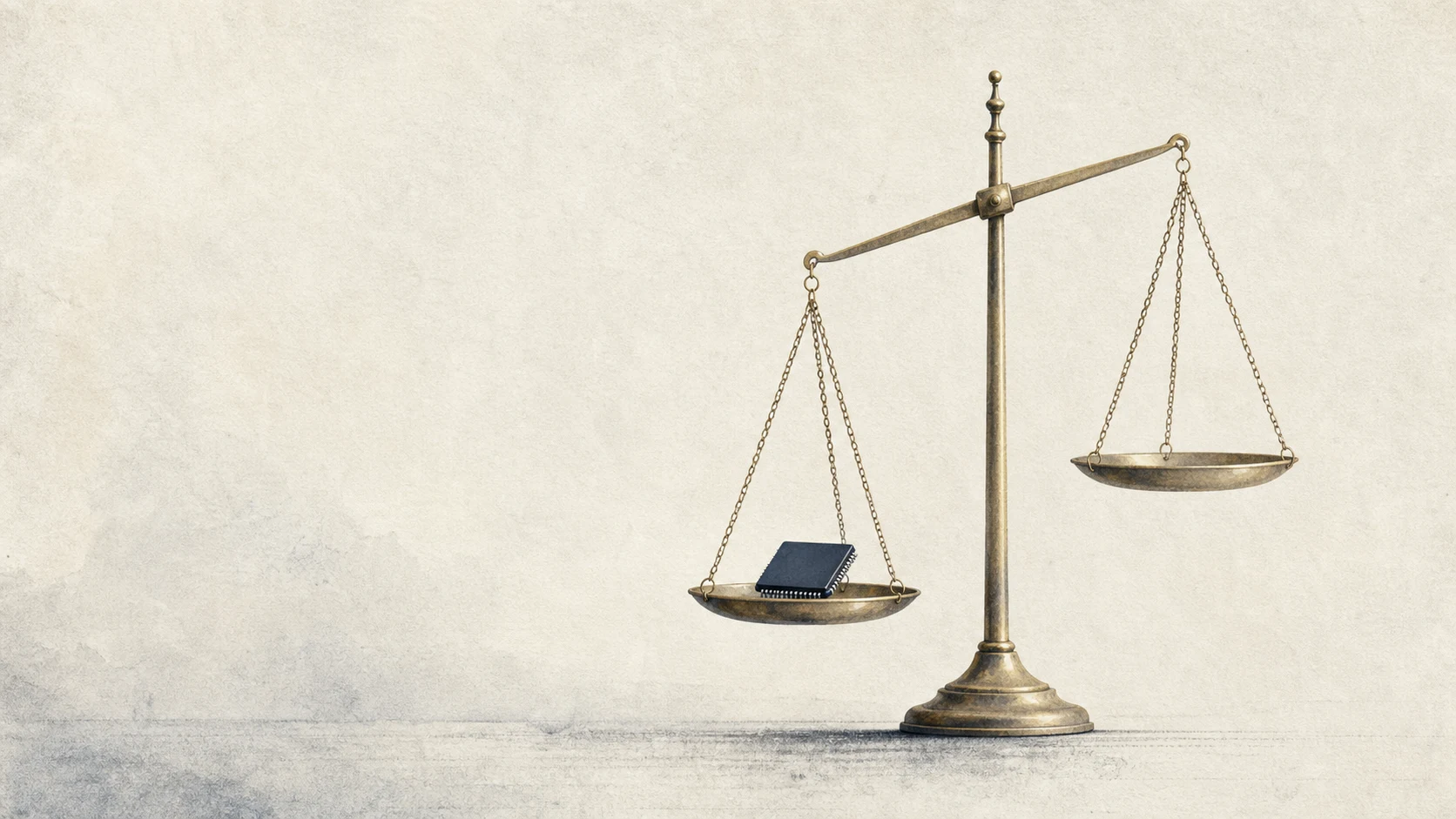
NYT v. OpenAI: how to read an evidence accusation without mistaking it for a ruling
Publishers accuse OpenAI of concealing searches and losing logs. A guide to separating allegations, prior rulings and sanctions that have only been requested.
On July 12, 2026, docket 5:26-cv-07078 contained a complaint and 11 opening-stage entries, but no ruling on the allegations. Reading the verb, author and document type prevents a claim from becoming a judicial fact in the retelling.
Apple accuses OpenAI, its hardware chief Tang Tan, engineer Chang Liu and io Products of misappropriating iPhone trade secrets to accelerate its first consumer device. The federal lawsuit, filed in San Jose, brings six claims and seeks injunctions and damages; OpenAI replies that it has "no interest in other companies' trade secrets." The case will test where the line sits between hiring talent and taking confidential know-how in the middle of the AI hardware race.
Apple asked to stop secret use, preserve evidence and return materials, but a complaint is not an order. A guide to the docket and the unresolved standard.
Jensen Huang opened CES 2026 with Rubin, NVIDIA's six-chip platform promising to generate tokens at one-tenth the cost, alongside a family of open models reaching all the way to level 4 autonomous driving.
OpenAI expands access to Sol, Terra and Luna and introduces ChatGPT Work, a surface that gathers context and acts through tools. Evaluating the agent requires separating the model, permissions, actions and verification.
My Ad Center will show whether an ad was created or edited with AI. The signal may come from Google's tools, an advertiser disclosure or a local requirement, and each route provides a different degree of certainty.
OpenAI introduces Sol, Terra, and Luna with access varying by product and plan, and one warning: more capability needs better controls.
VICIS tests whether a model can infer a concept shared by several images and apply it to a new query. The advance is promising, but the task remains far from solved.
DynaMiCS recomputes the data mixture during fine-tuning to improve specific tasks without degrading the evaluations a team wants to preserve.
Microsoft Research combines MagenticLite, MagenticBrain, and Fara1.5 to explore browser and local-file agents with specialized models, sandboxing, and human approvals.
Google measures Gemini usage by compute, not with a fixed message counter. We explain what affects the quota, when it refreshes, what each plan costs, and how to check it.
This website uses cookies to improve the browsing experience. Cookie policy.