EFE and Soria Noticias show two newsroom uses for AI
The CLABE-recognised projects focus on time-consuming work: classifying audiovisual archives and organising internal newsroom processes. Editorial judgment remains with the newsrooms.
On 20 July 2026, Spain’s Agencia EFE and Soria Noticias presented two artificial-intelligence projects aimed at very ordinary newsroom problems: finding the right audiovisual material quickly and cutting back on repetitive work that piles up before reporting begins. Both had been recognised in the first La Rioja Digital–CLABE Newsroom Innovation Challenge.
The noteworthy part is not a machine writing stories for reporters. It is a narrower choice: applying AI to parts of the workflow where classification, administration and search can take time away from verification, source work and original reporting. That distinction matters. A news organisation can automate a task while keeping editorial decisions and responsibility for publication with people.
EFE: making an audiovisual archive searchable
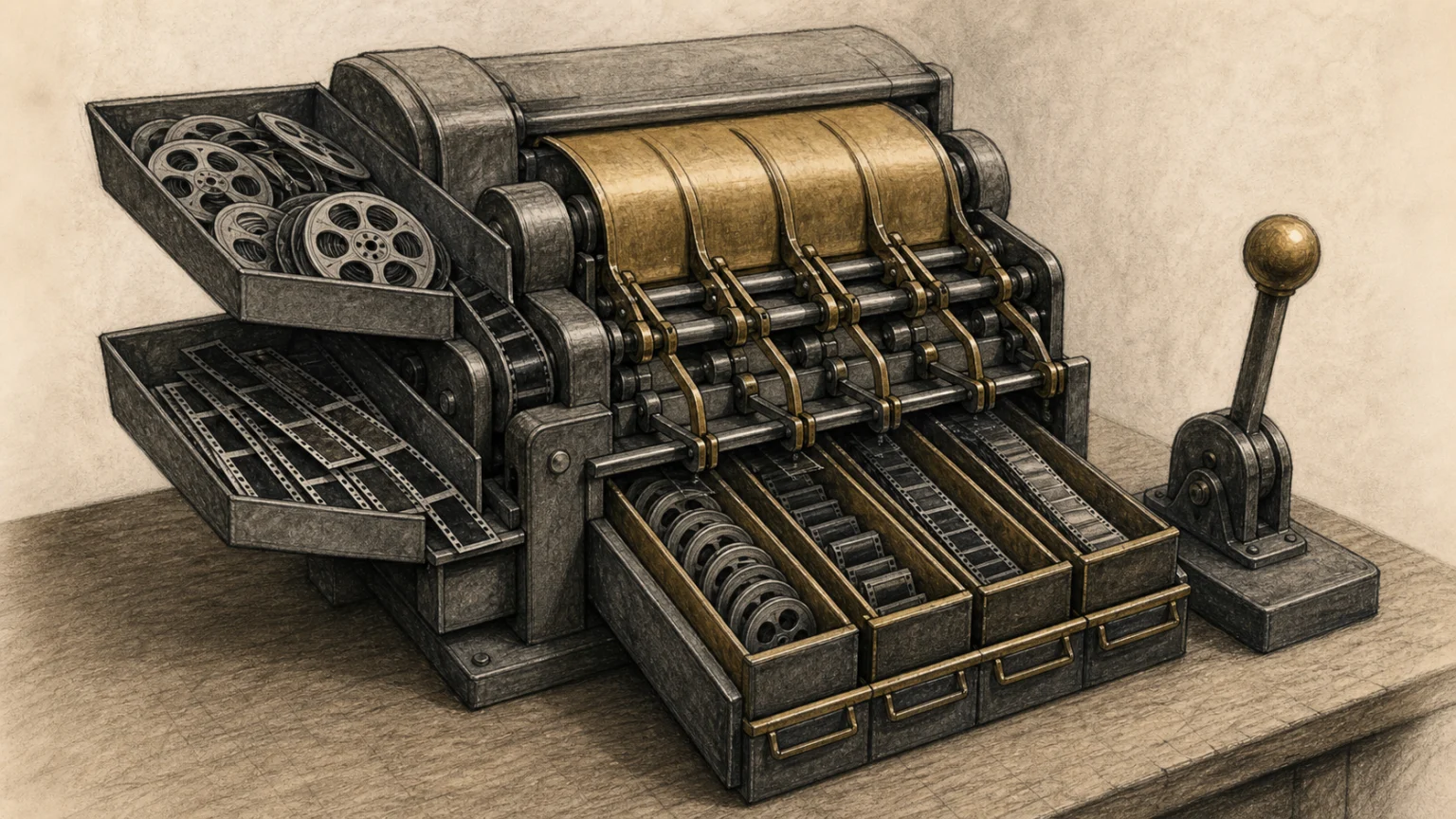
The winning project was EFE’s Automatic Photo and Video Metadata System, developed by the Applications Development Area within its Technology and Systems Directorate. The agency says the system generates metadata for photographs and video; Soria Noticias describes it as a visual-intelligence tool that produces structured descriptors for audiovisual archives.
Its purpose is straightforward in a newsroom with a large archive. A photograph may have been taken years ago and become relevant again, but it is only useful if staff can locate it when they need it. Descriptors and semantic search are intended to turn that archive into a retrievable resource rather than a collection of hard-to-explore files. EFE presented the application as automatic cataloguing designed to make audiovisual content easier to locate and reuse.
That does not mean the system chooses the image for a story or supplies the context it needs. Image selection, captions, usage rights and editorial relevance still require human review. Automation helps earlier in the chain, by reducing the work of labelling and tracking down material.
Witan: internal tasks to make room for reporting
Soria Noticias received a runner-up award for Witan, its own CMS, which the outlet says it developed with the Soria-based company Netytec. The newspaper explains that it includes several AI tools and an inbox designed for journalists. Its stated purpose is to optimise internal processes and automate mechanical and administrative tasks.
In April, the outlet’s director, Sergio García Cestero, described the aim as freeing journalists from repetitive, low-value tasks so they could spend more time on sources, original stories, local angles and reporting on the ground. It is a restrained account of what a useful deployment can seek. AI is not presented as a replacement for reporting, but as infrastructure that protects time for it.
The case also shows why an outlet’s size does not alone determine whether it can experiment. Witan is designed around the needs of a local newspaper. Its value does not depend on being universal; it depends on addressing real friction for that team: incoming information, administrative work and the organisation of daily workflows.
Two tasks require two kinds of measurement
EFE’s metadata system and Witan’s internal workflow should not be judged by one number. For the first, retrieval and descriptor accuracy matter: whether a search returns relevant material, omits useful images, or assigns the wrong people, places, or actions. For the second, the useful measures are processing time, steps removed, errors reaching the journalist, and the ease of correcting them. “It saves time” becomes a conclusion only when there is a previous process for comparison.
In its post-award presentation, EFE said its system had recovered more than 30 per cent of historical material that was previously difficult to find and would automatically index all newly received visual material. Those are results reported by the organisation that built the tool, not an independent audit. They are still useful for designing a reproducible test: select queries, define which material should appear, and compare retrieval before and after.
Editorial control begins with the input record
Automating an auxiliary task does not make it neutral. A wrong descriptor can hide an image or place it in a false context; an inbox can prioritise some sources and bury others. Review cannot mean manually repeating every operation, because that removes the saving. It means sampling results, recording classes of error, and reserving intensive review for decisions with greater consequences.
Provenance must also survive the shortcut. A photograph needs to retain authorship, date, rights, and context even when a model adds labels. A source’s message must keep its sender and history even when a tool classifies it. AI may create a layer of access; it should not replace the record that allows a journalist to inspect the original material.
A newsroom test in four columns
Before expanding a tool, a newsroom can record four columns for several weeks: specific task, previous measure, result with AI, and cost of review. Adding a fifth —type and severity of failure— prevents an average from hiding errors that could harm a source or reader. The NIST AI RMF Core calls for documenting tests, metrics, and tools, evaluating conditions similar to deployment, and monitoring behaviour in production. A small publisher can follow that sequence without turning itself into a laboratory.
The final decision is not simply whether to “use AI.” It is where the system adds value, which information it may process, which failure triggers a stop, and who remains accountable. EFE and Soria Noticias target different tasks, but they share the more durable idea: start with friction in the work and keep the judgment that gives the result journalistic meaning outside the automation.
That record also makes it possible to revisit the decision when the system changes. If an update alters descriptors, classification, or permissions, the newsroom can rerun the same sample and compare it with the baseline. Without versions and dates, an apparent improvement may come from easier cases, while a decline can remain hidden because the interface keeps the same name. Evaluation does not end on purchase day; it follows the workflow for as long as the tool remains involved.
It also creates an exit rule. If errors cross the agreed threshold, review costs more than the previous task, or the provider changes its handling of data, the newsroom can return to the earlier process while investigating. Reversible automation is easier to govern than a dependency with no alternative.
An award is not a substitute for daily evaluation
CLABE, which organised the challenge with La Rioja Digital, framed it as a way to encourage AI uses in production, editing, distribution, monetisation and content analysis. Its jury considered innovation, real-world applicability, measurable impact, scalability, sustainability and ethical use. Those are useful criteria, yet no award removes the questions every newsroom must ask afterwards: what data a tool processes, who can review its output, and how errors are corrected.
The two projects offer a practical starting point. Before asking a system to “do journalism,” it is worth identifying a particular bottleneck. Cataloguing a video, organising an inbox or removing mechanical steps are evaluable tasks: a newsroom can measure whether they save time and check whether the result is accurate. That foundation lets AI support the craft without becoming an excuse to lower its safeguards.
Sources
Sources for this piece
This piece draws on 4 primary source(s), gathered during reporting.
- EFE y Soria Noticias presentan el 20 de julio sus proyectos de IA distinguidos por Clabe — Agencia EFE
- Soria Noticias, premiado en el reto nacional CLABE de Periodismo e Inteligencia Artificial
- Soria Noticias presenta en Santander su implementación de la IA para impulsar el periodismo local
- Nació Digital, EFE y Soria Noticias son los finalistas del Reto de Innovación en Redacciones de CLABE
This article was produced with artificial intelligence under human editorial oversight.