Anthropic unveils MCP, a standard connecting AI and tools
Anthropic has released the Model Context Protocol, an open standard that lets AI assistants access external data and tools through a common interface. The proposal aims to reduce fragmentation when integrating models with enterprise services.
On November 25, 2024, Anthropic introduced the Model Context Protocol; the durable skill is to audit connection, permission, retrieved data and action separately.
Anthropic introduced Model Context Protocol (MCP) on Monday, an open protocol for connecting artificial intelligence assistants to external data sources and tools. The initiative addresses a practical problem: AI applications typically need custom integrations to access files, databases, code repositories or corporate services.
MCP proposes a common interface for those connections. Instead of developing a separate integration for every model and service, developers could create a protocol-compatible connector and reuse it across different applications.
The problem: AI doesn’t work alone
A language model can draft text, summarize information or answer questions, but it does not inherently know the contents of a Google Drive folder, the status of a GitHub project or the latest data in a database. To use that information, it needs both permission and a technical way to access it.
Until now, those connections have generally been built for specific use cases. A company that wants to give an assistant access to Slack, PostgreSQL and its internal documentation must connect each service to the AI application it has chosen. If it switches providers or creates another assistant, some of that work may have to be repeated.
Anthropic compares this situation with the early days of peripheral devices: without a shared standard, every connection requires a custom solution. MCP is intended to serve as that common layer between an AI application and the systems where information resides or actions are carried out.
How the protocol works
MCP’s architecture separates three elements. The host is the application a user interacts with, such as a desktop assistant. Inside it, an MCP client establishes a connection to an MCP server, which exposes specific data or tools.
For example, a server could allow an assistant to query a GitHub repository, read local files, run a PostgreSQL query or automate tasks in a browser. The protocol defines how those capabilities are described and requested, without requiring every application to invent its own format.
That does not mean the model receives unlimited access to connected systems. Permissions remain critical: a well-designed integration must define what information the assistant can read and what actions it can take. The standard makes the technical connection easier, but it does not replace security policies or human oversight.
Claude Desktop adds support as Anthropic publishes examples
Anthropic has added MCP support to Claude Desktop and published specifications, TypeScript and Python software development kits, as well as several reference servers. They include connectors for Google Drive, Slack, GitHub, Git, PostgreSQL, local storage and web automation through Puppeteer.
The company has also opened the protocol to other developers and providers. That decision matters because a standard is useful only if it is not confined to a single product. If AI applications, data services and tool providers adopt incompatible interfaces, MCP would be just another integration; if it wins support beyond Anthropic, it could significantly reduce the cost of building assistants connected to real-world work.
A building block for more useful—and more sensitive—assistants
The announcement comes as assistants’ usefulness depends less on maintaining a conversation and more on accessing the right context. A system that knows an organization’s documents, calendars, tickets and repositories can respond more accurately and carry out tasks. In return, it concentrates risks involving privacy, excessive permissions and incorrect actions.
For companies, MCP’s appeal lies in avoiding repeated integrations and maintaining an architecture that is more interchangeable across models and applications. For developers, it could simplify the creation of connectors that work with multiple clients. And for users, the promise is that an assistant will no longer ask them to copy and paste information between tools.
The real test will be adoption beyond Anthropic and the quality of the implementations. A common protocol could make AI connected to corporate data more accessible, but its value will depend on ensuring that this convenience does not lead to opaque or difficult-to-monitor access.
A connection standard is not a permission
MCP defines messages and roles through which an application discovers resources, tools and prompts exposed by a server. The initial specification also makes the host responsible for coordinating connections and controls. Two components speaking the same protocol does not decide which files a user may read, which query should run or which action requires confirmation.
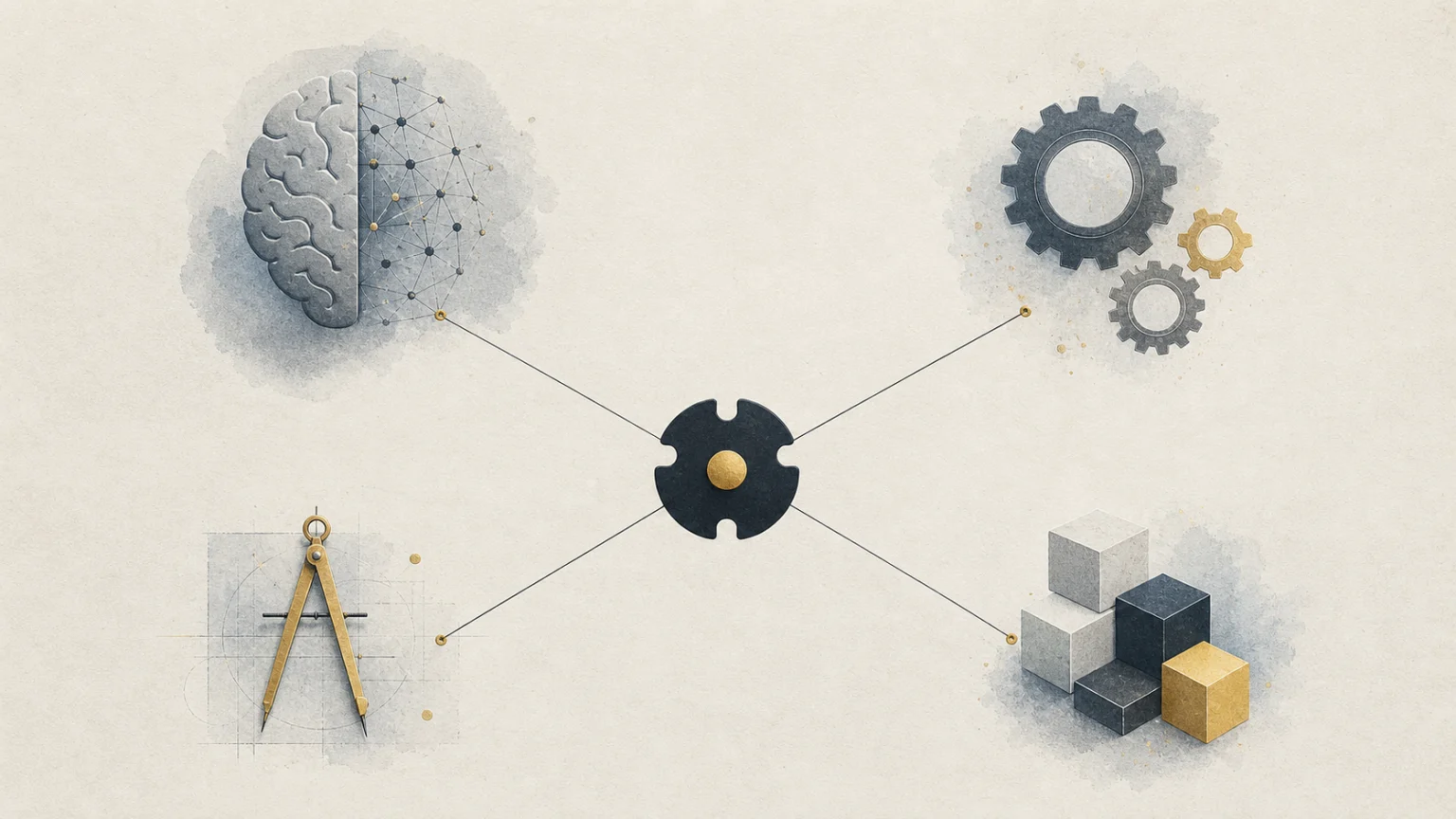
To assess an integration, draw four boundaries: user to host, host to client, client to server and server to the real system. At each boundary, record identity, credential, data crossing it, permitted operation and available log. This map reveals whether a seemingly simple connector concentrates privileges or sends context to a remote model the user did not expect.
Resources and tools do not carry the same risk. Reading a document can disclose information; invoking a tool can change state. A safe implementation minimises scope by default, previews parameters before sensitive actions and logs the response, error and user. A generic “allow MCP” confirmation is too broad to replace per-operation permissions.
How to test a connector before trusting it
A minimum test uses a low-privilege account, one permitted document, one forbidden document and a reversible tool. Verify that the server discovers only what is needed, does not summarise the restricted resource and requires approval for the action. Revoke permission and repeat: caches can preserve access after the source system removes it.
Treat retrieved content as untrusted too. A file may contain instructions aimed at making the model ignore the user or extract other data. The protocol transports context; it does not determine that context is safe. Separating data from instructions, limiting tools and validating parameters remain application responsibilities.
Interoperability is demonstrated by independent implementations, not by publishing a name. A reusable connector reduces work when different clients interpret the specification consistently, manage versions and report errors. Anthropic's announcement opened that path, but adoption and compatibility had to be observed over time.
The transferable skill is to audit every AI connection as a chain: who requests, what can be read, what reaches the model, what can change and where it is logged. A common protocol reduces integration work; it does not automatically reduce privilege or responsibility.
Version management belongs in the technical contract. A client and server can implement different revisions and connect successfully while disagreeing about one capability. Pinning supported versions, testing negotiation and failing closed prevents a silent update from enabling an unexpected operation.
When a server comes from a third party, review its code or vendor, dependencies, update mechanism and telemetry destination. Installing it adds software with access to the systems it exposes. The convenience of a catalogue does not remove the need for inventory, least privilege and rapid removal.
The protocol can change providers without changing this method. Run the same matrix with another host or server and compare permissions, traces and observed failures. Portability of evaluation matters as much as portability of the connector: it prevents an open architecture becoming blind trust in one implementation.
The comparison should be repeated after every material change.
This article was produced with artificial intelligence under human editorial oversight.