Emad Mostaque leaves Stability AI amid company crisis
Emad Mostaque left Stability AI's chief executive role and board on 22 March 2024; the company named Shan Shan Wong and Christian Laforte interim co-CEOs. The case separates technical openness, governance and economic sustainability.
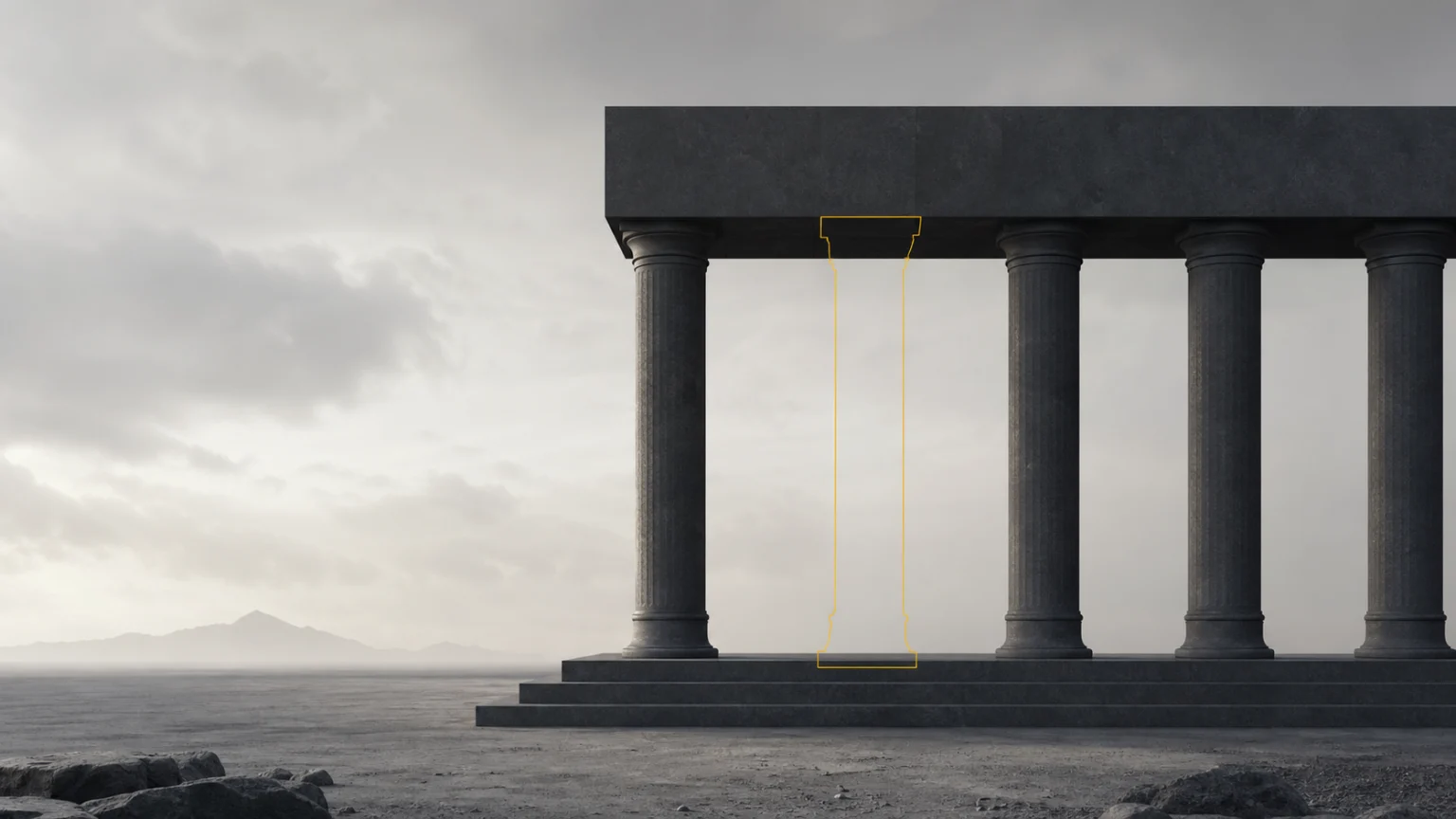
Emad Mostaque left his role as Stability AI chief executive and his seat on the board on Friday, 22 March 2024. The company's confirmation, dated 23 March, said that he was leaving to pursue decentralised AI. The board appointed two interim co-CEOs, not one: chief operating officer Shan Shan Wong and chief technology officer Christian Laforte.
The distinction matters because a transition is assessed through the functions that remain covered. Wong provided operational continuity; Laforte, technical continuity. The company simultaneously began a search for a permanent chief executive. Mostaque said Stability was in capable hands and that it was time to ensure AI remained open and decentralised.
The departure came during pressure to turn enormous technical influence into a sustainable business. Yet the primary sources available that day did not disclose cash figures or accounts that would support a precise diagnosis of the company's finances. “Crisis” here describes the observable combination of an abrupt leadership change, a need to commercialise and dependence on expensive technology; it does not justify inventing insolvency or a personal motive that was not stated.
What made Stable Diffusion different
Stability AI became a central name in generative AI through Stable Diffusion. In August 2022, the company released weights, a model card and code under an OpenRAIL-M licence that allowed commercial and non-commercial uses subject to use restrictions. The recommended version could run in a few gigabytes of video memory, enabling developers without access to a large laboratory to download, adapt and operate it.
That design changed the distribution of technical power. A closed service offers only the interface selected by its provider; downloadable weights let people examine behaviour, fine-tune the model, build extensions and deploy it on their own infrastructure. Applications, interfaces and communities could emerge without requesting permission for every experiment.
But “open” is not a binary property. At least four layers should be separated: the research paper; training or inference code; learned weights; and the data and recipe used for training. A project can open some layers and reserve others. Its licence can impose conditions too. Calling it simply “open source” hides what a third party can actually reproduce.
The transferable skill is to inspect the concrete package: can the weights be downloaded, is the necessary code available, does the licence allow modification and commercial use, is the training set known, and can training be repeated? Broad access and full reproducibility are related but different goals.
Popularity is not cash flow
In October 2022, Stability AI announced $101 million in funding led by Coatue, Lightspeed Venture Partners and O'Shaughnessy Ventures. The company said Stable Diffusion had been downloaded or licensed by more than 200,000 developers and that DreamStudio had over one million registered users. Those are adoption indicators, not profitability measures.
Funding pays for a phase; it is not recurring revenue. A laboratory must pay researchers, data acquisition and cleaning, training, evaluation, storage, inference, support and distribution. When it releases downloadable weights, some value travels outside its servers and can benefit third parties without producing a direct bill for the organisation that trained the model.
That does not make openness unviable. It forces an answer to who pays for what. Possible routes include a hosted API, subscriptions, commercial licences, enterprise support, private deployments, customisation and platform agreements. Each sells something different: managed compute, convenience, permissions, warranties, integration or expertise. “Monetising the community” is not a model until it identifies the customer, billing unit and cost to serve.
The licence is part of the product
In December 2023, Stability AI introduced a three-tier membership. Personal and research use remained free; a Professional tier, announced at $20 per month, granted commercial self-hosting rights to creators, developers and startups; an Enterprise tier offered custom terms and support. The company explicitly wrote that membership would play a central role in funding future research and development.
That sentence exposes the business problem more clearly than a label. When a licence changes, more than a legal document changes: so does the proposition for people building on the model. A customer should record the exact weight version, the licence it accepted, permitted use, redistribution duties and what happens when it needs a later release.
Technical continuity must also be separated from commercial continuity. Downloaded weights may continue to operate if the provider changes strategy; patches, new models, indemnity, support and a stable API depend on the organisation. Openness reduces some lock-in risks, but does not remove maintenance, security or compatibility work.
What a founder's resignation means
A founder may concentrate public narrative, fundraising, commercial relationships and product decisions. A departure creates four questions. First, who has authority over budgets and priorities? Second, which team retains technical knowledge? Third, how much financial runway supports the plan? Fourth, which promises to customers and developers remain in force?
Wong and Laforte's appointments provisionally divided operational and technical leadership. They did not prove that the crisis was resolved or that the company lacked continuity. The board's statement emphasised developing and commercialising generative products while preserving the team, technology and community. This is an interested party's statement of intent: useful for knowing the announced plan, not for certifying its outcome.
Mostaque's stated reason was to pursue decentralised AI. It is not legitimate to replace that explanation with financial motives, board pressure or a specific dispute without evidence. Reporting can describe the business context while separating what the founder said, what the company confirmed and what remains undocumented.
A continuity dashboard
Anyone dependent on a model provider should maintain a dashboard with six columns. Asset: weights, API, code, data or service in use. Right: licence and applicable terms. Operation: where it runs and who pays for compute. Continuity: what can be maintained without the provider. Replacement: migration time and cost. Signals: changes in leadership, licensing, price, key staff and release frequency.
For a downloadable model, a copy of the weights is not enough. Preserve its hash, version, model card, licence, dependencies, internal evaluation and update procedure. For an API, record limits, data export, alternatives, service levels and withdrawal behaviour. For both, the decisive test is to rehearse substitution before it is needed.
The dashboard prevents two easy conclusions. One is that a large community guarantees a company: adoption can rise while costs exceed revenue. The other is that a corporate crisis erases the technical asset: distributed models, code and knowledge can continue to create value outside the company.
The lesson from the transition
Stable Diffusion demonstrated that distributing weights can accelerate innovation, competition and learning. Mostaque's departure revealed the complementary problem: developing frontier models, sustaining teams and offering reliable services requires an economic and governance architecture, not merely an open licence.
The rigorous way to assess an open AI company is to separate six things that enthusiasm often blends: technical asset, actual degree of openness, rights of use, costs, revenue and governance. If one fails, the rest do not disappear, but the risk changes. That separation makes it possible to evaluate Stability AI—and any future laboratory—without mistaking hundreds of millions of downloads for available cash, or a founder's exit for the automatic disappearance of its technology.
This article was produced with artificial intelligence under human editorial oversight.