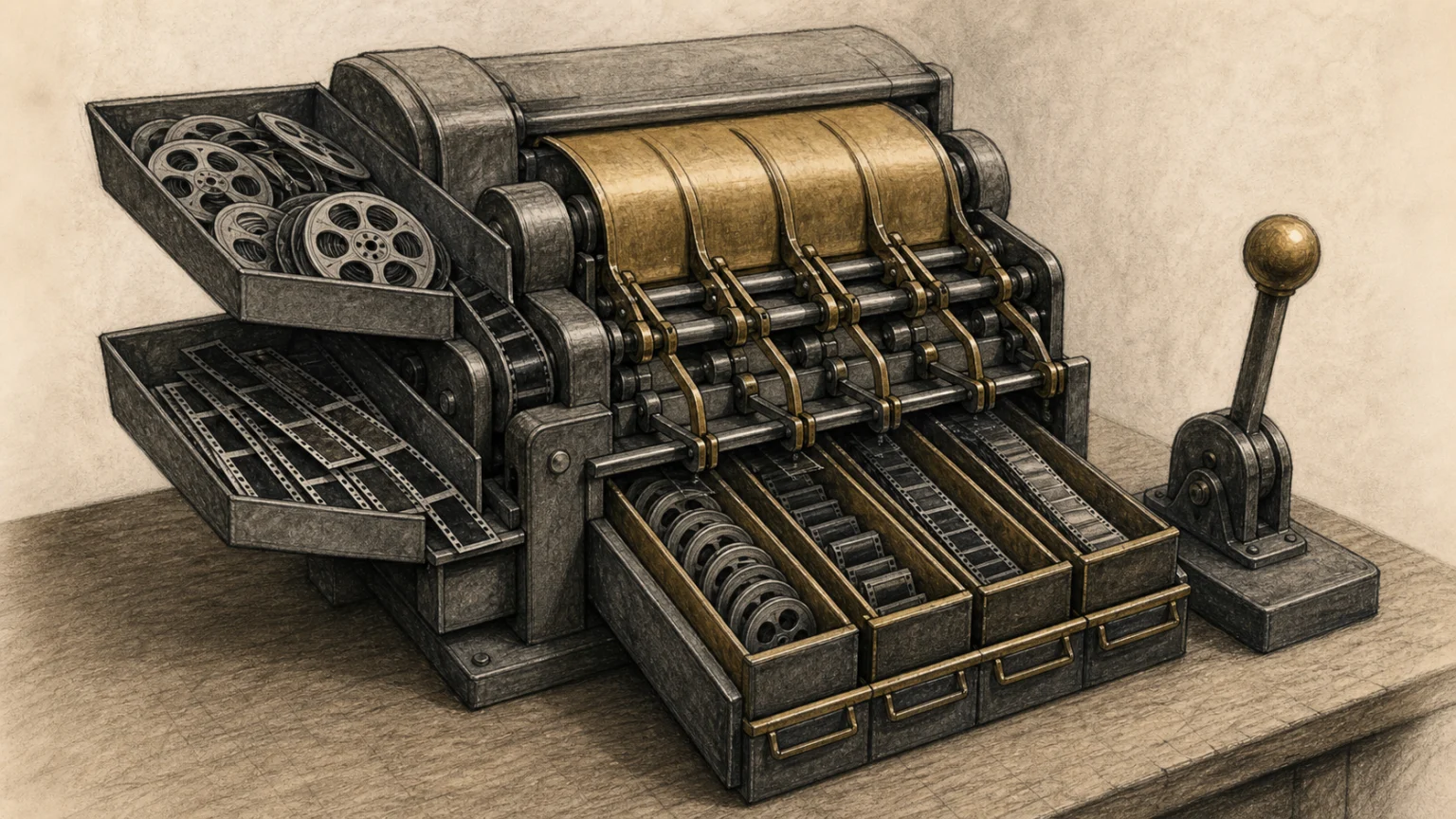
Nano Banana 2 Lite and Omni Flash: reading speed, price and release status
Google pairs a stable image model with a preview video model. Their documentation shows how to compare cost, latency, limits and maturity without treating a demo as a production guarantee.
On June 30, 2026, Google released Nano Banana 2 Lite and Gemini Omni Flash for developers. The first generates and edits images with speed and cost as priorities; the second creates and changes video through conversation. They fit one creative workflow, but carry different maturity contracts: gemini-3.1-flash-lite-image is generally available, while gemini-omni-flash-preview is a public preview.
That difference matters more than the demonstration. A stable model provides an identifier intended for sustained integration; a preview can support exploration, but features, limits and behavior may still change. The transferable skill is reading a model page as a specification: status, pricing unit, resolution, latency, inputs, known limitations and evaluation method. Only then can a team decide which role it should occupy in a product.
Two tools for two different jobs
Nano Banana 2 Lite is the efficiency specialist in the Gemini image family. Google recommends it as a replacement for Gemini 2.5 Flash Image in rapid ideation and high-volume pipelines. The endpoint specification restricts output to 1K, supports 14 aspect ratios and can generate or edit images from text and image input. It offers neither 2K nor 4K output, caching, search grounding or URL context. This is specialization, not a cheaper edition carrying every higher-tier feature.
Gemini Omni Flash occupies another stage. Its model page accepts text, images and video, and returns video between 3 and 10 seconds at 720p and 24 frames per second. The Interactions API preserves state across turns: a developer can generate a clip and request changes without describing everything again. Every turn produces a new video; conversation is not timeline editing with deterministic control of every frame.
The proposed chain is direct: generate visual variants with Lite, choose one and use it as a reference for animation with Omni. That can reduce the cost of exploration before paying for video. It can also propagate errors. If the source image contains incorrect text, a malformed hand or an inconsistent brand, animation will not automatically repair it. Every boundary between models needs a quality gate and a record of which file entered the next stage.
Price and latency need denominators
Google announces $0.034 for a 1K Nano Banana 2 Lite image and $0.10 for each second of Omni Flash output. The second figure makes a ten-second clip cost one dollar before retries, storage, transfer and review. A conversation that creates a new version on every turn incurs output cost again. The useful measure is not the price of one call but the price of one accepted asset, including failed variants, edits and checks.
Latency needs the same discipline. The announcement assigns Lite a four-second text-to-image result, while the model page says it targets end-to-end latency below two seconds. Both are official figures, and the pages do not define matching conditions that reconcile them. They should not be merged or resolved by choosing the smaller one. A team needs percentile measurements, not just an average, under its own region, input size, aspect ratio, concurrency and thinking mode.
The Nano Banana 2 Lite model card gives the word “quality” more context. Google used human side-by-side evaluations to calculate Elo for generation and editing, multi-turn tests, and an automatic rater for factuality and style diversity. Those results compare preferences within vendor-curated sets; they do not promise an accuracy rate for catalogs, medical diagrams or advertising. A useful benchmark should resemble the work the system will produce.
Limitations describe the product better than adjectives
The same card lists known Lite weaknesses: small text can be blurry at 1K; long paragraphs and full pages remain difficult; character consistency is imperfect; some mask- and doodle-based edits follow instructions only partly; and the model can confuse left and right. Google also acknowledges limitations in world knowledge, 3D reasoning and factuality, with a January 2025 knowledge cutoff. “Legible text” in an announcement does not mean a poster can be published without checking every character.
The specification does credit the model with fast multi-turn local edits, and its evaluations include multiple inputs. It is therefore inaccurate to describe it as unable to work sequentially or with several references. The precise formulation is more useful: it supports those operations, but consistency can degrade and output remains limited to 1K. Declared capability and observed reliability belong in separate columns.
Omni Flash has a list more typical of a preview. The Gemini Omni Flash guide says it does not support audio references, video extension or interpolation, voice editing, multiple video references, or parameters such as system instructions, temperature and separate negative prompts. Reference videos up to three seconds pass the schema but are not processed correctly. Editing uploaded videos is unavailable in the European Economic Area, Switzerland and the United Kingdom, although editing model-generated video is supported.
Google adds that English is fully supported, while other languages have not been evaluated and may vary. It also notes character-consistency limits when scenes change or the camera pans. These are testable restrictions that should become acceptance cases. If a product needs precise dubbing, continuity across many shots or editing customer material in Europe, Omni Flash should not be presented as though those gaps were future details with no present impact.
Conversation preserves context, not visual fidelity
The API uses a previous interaction identifier to preserve history and video state. The announcement proposes up to three sequential edits. In practice, each instruction should name one change and state what must remain unchanged. The guide itself recommends simple editing prompts because overly descriptive ones can introduce unintended changes. Retaining every output makes it possible to return to the last good version; relying only on conversational state obscures where a change appeared.
For images, a fixed test set should include small and large text, repeated characters, spatial relations, products with logos, multiple references and chained edits. Video tests need camera movement, on-screen text, audio, continuity and localized changes. Each case should record success, time, cost and retries. An average quality score without an operational failure rate can hide that a cheap tool requires so many repetitions that it stops being cheap.
Preview status also calls for isolating the provider behind an internal interface, pinning the exact model identifier, preserving test inputs and outputs, and watching the API release notes. A “latest” alias helps demos but harms reproducibility. An update can improve quality while breaking a working sequence; production needs regression tests before accepting it.
Provenance is neither truth nor permission
Google says Lite images carry always-on SynthID and C2PA credentials, while generated videos include invisible SynthID detectable by software. Those signals help establish that a file passed through the system. They do not prove that the scene is factual, that the user owned rights to the source image or that every element was generated. Provenance describes technical history; verification assesses the represented claim.
Final review must cover visual accuracy, text, identity, intellectual property, consent and fitness for context. For advertising or information, a person needs to compare the result with the real product or event, not only with the prompt. AI involvement may also need visible disclosure under policy or context even when an invisible watermark exists.
Nano Banana 2 Lite and Omni Flash do not form one magic button. The first is a stable, specialized component for fast 1K images; the second is a preview laboratory for short conversational video with explicit regional and technical limits. Reading status, denominator, restrictions and evidence before integration turns a model announcement into an engineering decision that can be explained, measured and reversed.
Sources for this piece
This piece draws on 4 primary source(s), gathered during reporting.
This article was produced with artificial intelligence under human editorial oversight.