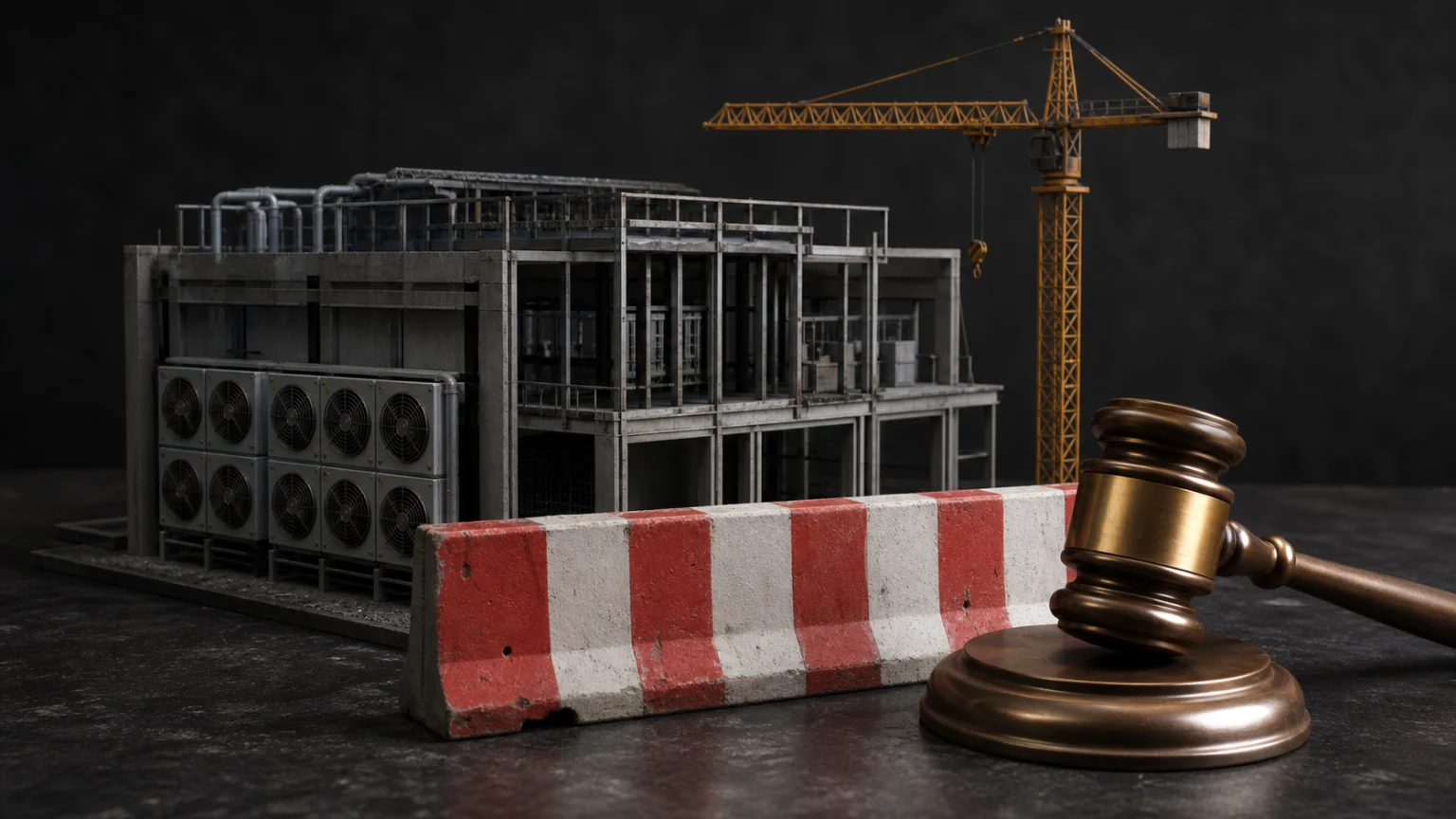
A 47% Poll Is Not a Veto: How to Read Local Opposition to AI Data Centers
A Redfin survey found more opposition than support for a hypothetical AI data center nearby. That matters, but it cannot replace evidence about a specific project. This guide shows how to tell the difference.
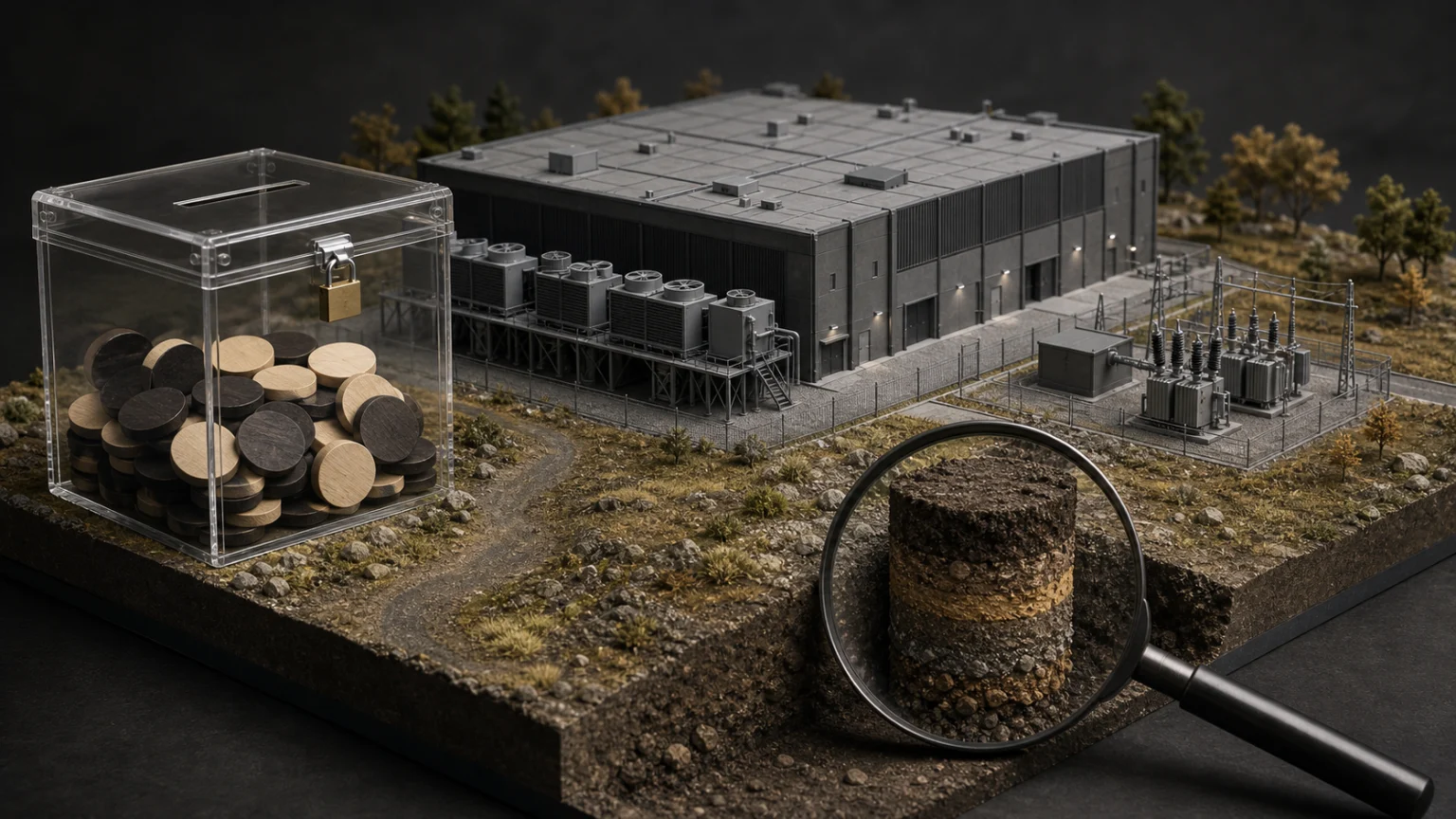
On May 4, 2026, Redfin published a survey conducted by Ipsos and commissioned by the real-estate company in which 47% of surveyed US residents opposed building an AI data center in their neighborhood and 38% supported it.
The news is not that the public issued a nationwide veto. It is that the infrastructure behind assistants, generative models and cloud services is now understood as something physical: a facility with computers, cooling equipment and power supply near homes, schools, roads and water systems. That shift requires a better way to read both rejection headlines and investment promises.
Step one: what the survey actually asked
Redfin released the 47% opposition and 38% support result on May 4. The right starting point is the precise object of the question, not the headline. The company’s published questionnaire defines an AI data center as a facility housing high-performance computing, hardware, cooling systems and power supplies needed to train and run complex AI models. It then asks how a respondent would feel about construction in their area or neighborhood.
The available answers were strongly support, somewhat support, somewhat oppose, strongly oppose and no opinion. The 47% combines the two forms of opposition, while 38% combines the two forms of support. The result therefore reports a disposition toward a described scenario. It does not mean that 47% of respondents had reviewed a permit application, a transmission-line route, a water withdrawal, a tax agreement or a particular grid connection.
That precision does not make the result trivial. A national attitude can warn companies, regulators and local governments that an “innovation and jobs” narrative will not be enough on its own. It can also compare data centers with other land uses included in Redfin’s survey. But it is not a census of affected communities, nor an automatic forecast of how a municipality will vote.
The first mistake: turning a hypothetical opinion into a local fact
The word “neighborhood” makes the answer feel immediate, but respondents were not given a technical sheet for a particular facility. They did not see its requested capacity, cooling design, water source, generator count, construction hours, substation route or conditions for connecting to the grid. Nor did they have to choose the project against a real alternative use of the site.
This does not make the poll useless. It defines its proper use. It measures a concern and helps frame questions; it does not calculate the cost of an installation. A careful discussion can say both, “it is meaningful that opposition exceeds support,” and “we do not yet know whether this specific project will increase pressure on this grid or aquifer.” Both statements can be true.
The same rule applies when a company presents a favorable poll. Sixty percent hypothetical support would not prove that a council should approve a development. A survey measures a stated preference, using a particular wording, at a particular time. Authorization requires engineering evidence, contracts, permits and clear responsibility.
The second mistake: treating a national number as the neighborhood bill
There are sound reasons the conversation is not abstract. On December 20, 2024, the US Department of Energy said, drawing on a Lawrence Berkeley National Laboratory report, that data centers used about 4.4% of US electricity in 2023 and could account for 6.7% to 12% by 2028.
Those are important figures, but their unit of analysis is the country and their form is a range-based projection. They do not state the demand of one campus or isolate the portion caused solely by AI. The Department places growth alongside several drivers, including data-center expansion, manufacturing and electrification. Using 12% as if it were the certain load of one city would be as misleading as ignoring the range altogether.
This distinction will still matter next year: an aggregate statistic explains why a planning challenge exists; a local specification lets a community decide how to address it. The first calls for a national report. The second calls for requested megawatts, an operating timetable, available capacity, planned grid work, who pays for it and what protects customers if the forecast changes.
Water, noise and the grid: the case matters more than the label
Water concerns also have no universal answer. The US Environmental Protection Agency documents Quincy, Washington, where the city and Microsoft built a facility that treats cooling water and recirculates it to the data center, reducing reliance on local potable groundwater.
That case does not prove every data center is solved, or that reuse is free or applicable everywhere. It teaches the opposite lesson: the answer depends on water quality, geography, water rights, existing pipes and an agreement between the operator and the city. The EPA says the project took more than ten years of planning and construction and became operational on June 30, 2021. A real mitigation is infrastructure, a timetable and a verifiable obligation, not a sentence on a slide.
The same method works for noise and electricity. Instead of asking only, “is a data center good or bad?”, ask, “what sound level is permitted at the property boundary, how will it be measured and what happens if it is exceeded?” Ask, “which backup generators will be installed and when will they run?” Ask, “what capacity is being reserved and which grid upgrades are required?” The answers may differ sharply between two projects both described as AI.
Three folders to open before taking a position
To avoid getting lost between promises and fear, use three folders. The first is attitude. Put polls like Redfin’s there: who asked, whom they asked, when, which definition they used and which response options were offered. These materials show what concerns exist and whether public communication needs to improve.
The second is impact. It should contain project documents: requested capacity and hourly profile, cooling technology, water use and source, auxiliary-equipment emissions, noise, transmission work, land area, construction jobs and permanent jobs. A promise of “clean energy” should distinguish an electricity-purchase contract from the physical, time-specific availability of the local grid. A promise of “low water” should state whether it means withdrawal, evaporative consumption or potable water.
The third folder is decision and allocation. It includes the authority granting each permit, the applicable environmental review, connection conditions, fees, incentives, public-consultation timeline and who bears the cost if new pipes, substations or roads are needed. This folder turns an identity argument into an auditable decision.
Seven questions that do not expire
When the next headline arrives, these questions help move from reaction to verification:
- Does the cited number come from a survey, an operating measurement or a forecast?
- What was the literal question, and which population answered it?
- What are the proposed project’s size, power demand and operating date?
- Where will its electricity and water come from, and what measure is published for each?
- What is the estimated peak-hour impact, not only an annual average?
- Which binding condition limits noise, water, emissions or traffic, and who monitors it?
- Which local benefit — jobs, infrastructure or revenue — is signed, and which is merely an estimate?
No isolated answer decides a case. Taken together, they expose a promise without a mechanism, an alarm built at the wrong scale or a mitigation already backed by plans and contracts.
The useful debate is not “for” or “against” AI
A data center can bring economic activity, computing capacity and improvements to local services; it can also concentrate demand where the grid, water or land are already scarce. Both possibilities fit the Redfin result. The poll shows that many people anticipate the second risk. It does not calculate the balance for any one development.
That is the pattern worth retaining. Every physical technology — a battery factory, power line, desalination plant or data center — creates national headlines and local decisions. A reader who can distinguish opinion, impact and permission does not need to accept anyone’s slogan. They can ask for the missing page in the project file.
Sources for this piece
This piece draws on 4 primary source(s), gathered during reporting.
This article was produced with artificial intelligence under human editorial oversight.