Luma AI opens Dream Machine, its text-and-image video generator
Luma AI has launched Dream Machine, a model that generates video clips from text and images. Its public release brings AI video creation to users who until now could only watch demos of rival models.
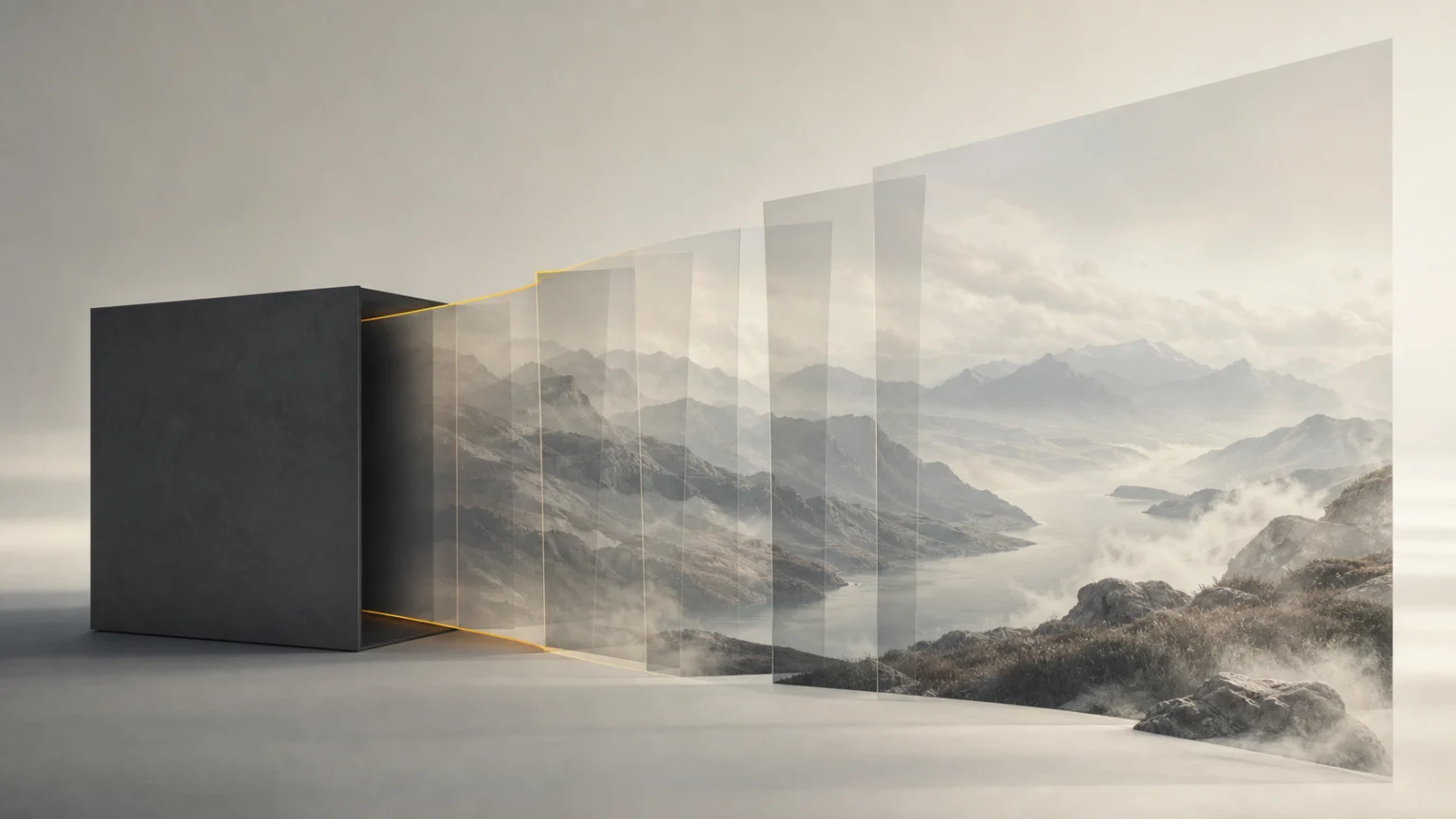
On June 12, 2024, Luma AI opened Dream Machine, a video generator taking text and images. Luma’s original announcement confirms public access and shows examples selected by the company; launch figures for duration and speed are declared specifications rather than an independent success rate.
The tool generates five-second sequences, equivalent to 120 frames at 24 frames per second. Luma says its model can produce those 120 frames in about 120 seconds, a turnaround designed to let users try several versions of the same scene without waiting hours for each result. Primary source.
A video model to try, not just watch
Dream Machine accepts a description of a scene—for example, a shot of a person walking down a rainy street—and produces a short video. It can also start from an image, a particularly useful feature for anyone who wants to preserve the look of a character, product or illustration while adding motion.
Luma describes Dream Machine as a transformer, the family of models that made large language systems popular and is now also being applied to image, audio and video. In this case, it was trained directly on video to learn not only what an object looks like in a frame, but how it should change from one moment to the next.
That difference is central. Generating a static image is already relatively common; video requires preserving the identity of characters, lighting, perspective and the trajectory of objects across dozens of consecutive frames. When the model fails, hands change shape, objects warp and movements defy physics.
The company showcases scenes with moving cameras, people, animals and complex environments. They are striking demonstrations, but it is important to distinguish between a clip selected for its strong result and everyday use: consistency still depends heavily on the prompt, the complexity of the scene and how many attempts the user is willing to make.
Generative video moves beyond closed testing
The announcement comes four months after OpenAI unveiled Sora, its video model, which had raised expectations with long, visually convincing sequences while remaining restricted to a limited group of evaluators. Google also introduced Veo in May, as part of a private program for selected creators.
Luma’s decision changes the competitive landscape because it turns comparison into something practical. Anyone can write a prompt, upload an image and assess both the system’s visual quality and its flaws. That openness could attract creators, agencies and product teams that need rapid prototypes, but it also exposes the model to scenes that are far less controlled than those in a presentation.
This is not Luma’s first foray into visual creation. The company made a name for itself with mobile-based 3D capture tools and Genie, a model for creating 3D assets. Dream Machine extends that push into a much broader consumer format: short-form video designed for social media, advertising, presentations and proof-of-concept work.
Faster ideation, not a camera replacement
For video professionals, the immediate use is not to replace an entire shoot. Clips last only a few seconds, and it is still difficult to request highly precise actions, continuity between shots or a specific performance. Its value lies in the early stages: visualizing an idea, exploring a style, preparing an animatic—an audiovisual sketch of a sequence—or creating short assets that can later be edited with conventional footage.
Image generation also opens a clear commercial avenue. A retailer can animate a product photograph; a studio can turn concept art into an atmosphere test; a communications team can prepare several versions of an ad before investing in production. In all these cases, the main savings come from speeding up exploration, not from guaranteeing a final result ready for publication.
The expansion of these tools also underscores two problems the industry still needs to solve: the provenance of training data and the ease of creating realistic-looking images. As the models become available to more users, safeguards against impersonation and mechanisms for identifying generated content will become increasingly important.
Dream Machine puts Luma among the companies competing to define generative video. The real test starts now: whether its speed and public access outweigh the limitations that models still face when representing motion, causality and visual continuity.
Public access changes the evidence
A closed demo permits evaluation of selected examples; an open tool lets testers prepare prompts in advance and preserve successes and failures. Comparison needs the same duration, resolution, attempt count and budget. Showing the best of many generations without the discarded count inflates perceived reliability.
Text-to-video and image-to-video are different tasks. An image supplies identity and composition; text leaves more decisions to the model. Score instruction following, subject consistency, motion, camera and artefacts separately. A visual average may hide a changing face.
Speed is not productivity
Complete advertised generation time with queueing, retries, editing and export. A fast tool requiring many attempts may consume more work. The useful unit is time to an accepted shot under a criterion fixed before starting.
Preserve provenance from the prompt: initial image, text, seed, version, file and modifications. If video leaves the platform, it needs a label that survives publication. A clear interface prevents a synthetic scene being presented as a record of an event.
Commercial use adds rights over inputs and questions about training data. If the company publishes insufficient detail, state the limit. Free access does not grant rights to somebody else’s photograph or settle attribution.
The transferable skill is to evaluate generative video through conditions, discard rate, continuity, total time and provenance. The protocol compares Dream Machine with later models without letting a spectacular selection replace testing.
Apparent physics is tested through continuity
Design scenes with contact, gravity, occlusion and object permanence, then inspect frames rather than cinematic feeling alone. Attractive camera motion may distract from a changing hand or disappearing object.
Prompts should include relationships: who takes what, what remains behind and what must occur first. If the model satisfies nouns but not order, it has generated appearance without causality. Scoring components helps select uses such as storyboards, where some failures are tolerable, versus evidence, where none are.
Creators preserve discarded generations and selection criteria. This reveals human work and estimates repeatability. The final output may be good and still unlikely on the first attempt.
Before publication, review recognisable people, brands and input materials. A short video may implicate identity or property. Technical accessibility does not remove editorial obligations.
A creative team can decide in advance which errors are editable and which require regeneration. That boundary avoids spending hours repairing a shot that never met the instruction. Measuring discard reasons turns trial and error into knowledge of the model.
Evaluation also preserves date because a service may change without notice. A result from the launch version does not automatically describe the current interface or later models.
This article was produced with artificial intelligence under human editorial oversight.