Lumiere: Google Generates Full Videos with Space-Time Diffusion
Google Research introduces Lumiere, a text-to-video model that generates an entire clip at once. Its architecture aims to avoid the jumps and incoherent motion common when building video with AI.
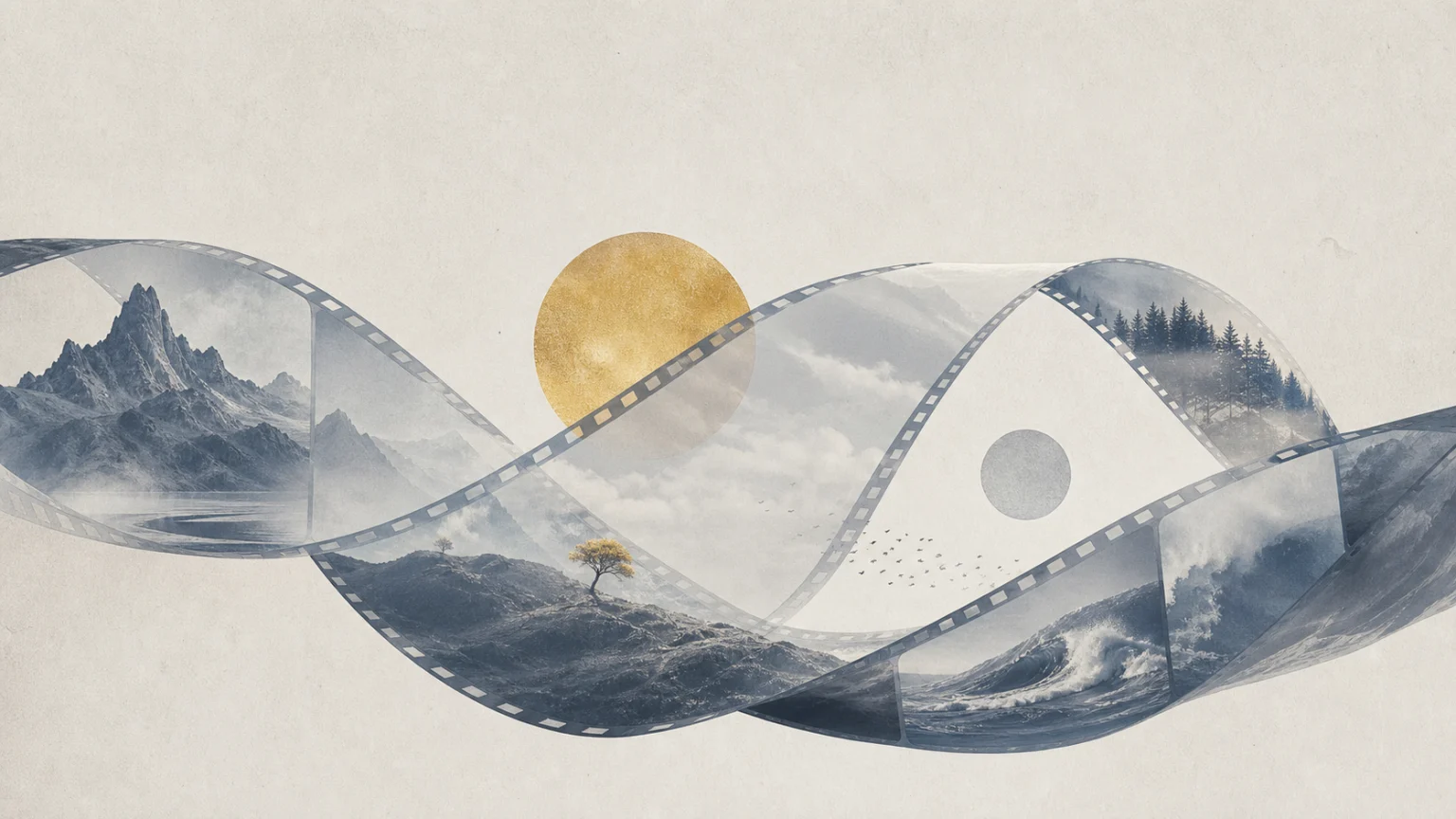
On January 23, 2024, Google researchers published Lumiere, a diffusion model that generates a video’s full temporal duration through a Space-Time U-Net. The technical paper describes the architecture, tasks and evaluations; it presents a method for improving continuity, not a camera capable of recording events.
The approach targets one of the most visible problems facing video generators: keeping objects, people and backgrounds evolving coherently over several seconds. In demonstrations published by Google, Lumiere creates five-second videos at resolutions of up to 1,024 × 1,024 pixels. Primary source.
Video is not a succession of independent photos
Diffusion models start with visual noise and progressively remove it over a series of steps until they form an image or video that matches the written instruction. This is the family of models that popularized image generation through tools such as Stable Diffusion.
Turning that process into video adds a significant challenge. It is not enough for each frame to look appealing on its own: a bicycle must retain its shape as it moves, a camera must move without distorting the scene, and an object that becomes hidden must reappear consistently.
Many earlier systems split up the work. They generated a handful of keyframes and used another stage to add frames between them or extend the video's duration and resolution. That approach reduces the computational cost, but it can introduce discontinuities: sudden changes in a subject's appearance, backgrounds that transform, or unnatural motion.
Lumiere handles space and time within a single network. The Space-Time U-Net simultaneously downsamples and reconstructs the video's visual and temporal information. Put simply, the model can study an action as a complete sequence, rather than as a collection of images that must be stitched together afterward.
Generating the clip at once does not mean diffusion is solved in a single computation: the system still refines the noise over multiple steps. The difference is that, during that refinement, it works with the video's entire duration.
From a sentence to animations and moving images
The work is not limited to text-to-video. Google shows that the same architecture can be adapted to several creative tasks through different conditioning methods.
Lumiere can animate a still image from a description, transform the style of an existing video, or fill in missing areas in a sequence. It can also create cinemagraphs—pieces in which most of the image remains still while only one specific region moves, such as steam rising from a cup or water flowing from a fountain.
These variations matter because practical use of generative video does not always involve requesting a scene from scratch. For a creator, agency or design team, it may be more useful to start with a photograph, modify an element in a clip, or add motion to material that has already been produced.
More coherence, but not yet a video camera
Lumiere's advance lies in its generation method, not in turning AI into an immediate replacement for filming. The research examples show brief, carefully selected scenes; they do not guarantee that the system will respond with the same precision to every instruction, maintain complex characters throughout long videos, or provide the exact control required by an audiovisual production.
Even so, the architecture focuses attention on a central limitation of this technology. AI-generated images have reached a high level of quality because each result is static. Video requires continuity: what appears matters, but so does what happens before and after.
Google Research places Lumiere in an active race to make that continuity more credible. If models can preserve motion, identity and composition for longer, generative video could move from eye-catching demonstrations to more useful tools for animation, advertising, visual prototyping and educational content.
What the architecture addresses
A U-Net reduces a representation to capture broad relationships and then reconstructs it while recovering detail. Lumiere extends that path through space and time: it compresses and expands frames together so the model can learn motion as a unit. The paper contrasts this with generating distant keyframes and later inserting intermediate images, a separation that can propagate inconsistencies.
“Generating at once” does not mean obtaining the video in one operation or removing diffusion. The system still begins with noise and refines it; the difference is that the network represents the full duration across its temporal scales. This distinction prevents an architectural choice from becoming a promise of instant, long or perfectly controllable video.
How to measure consistency without trusting a demo reel
A test uses prompts with recurring entities, occluded objects, turning cameras and motion with cause and effect. Review identity, geometry, background, trajectory and instruction compliance frame by frame. Preserve seeds and failed examples as well. Showing only attractive clips measures the curator’s skill, not the system’s success rate.
Comparisons need the same duration, resolution, sample count and compute budget. If one method generates more candidates and shows the best, that advantage must be disclosed. Human preference can assess naturalness, but evaluators should be blind to model identity and use separate criteria; a global impression hides whether movement, identity or text failed.
Editing requires provenance
Image-to-video, stylisation and inpainting bring the method closer to creative work, but they also mix real and synthetic material. Preserve the original, instruction, mask, model version and output. That chain makes the edit repeatable, attributes contributions and prevents a fabricated scene from being presented as a recording.
The transferable skill is to read generated video as an auditable sequence: what condition it received, what changed across frames, how many samples were discarded and which material came from a real source. With that record, a demonstration stops being magic and becomes comparable evidence.
Visible resolution does not summarise the system
A video may first be generated at lower resolution and pass through upscaling or interpolation. Compare methods by following every stage and its cost, not only the final file. Disclose cropping, stabilisation or later editing too; such treatment can improve appearance without belonging to the described model.
Temporal evaluation needs suitable references. Frame-by-frame metrics may reward sharpness while missing identity jumps. Distribution-level video metrics can hide particular failures. Combining local inspection, blind preference and consistency tests is more useful than one score.
An educational or informational use adds a truth question: does the clip illustrate a hypothesis or claim that something happened? Generation may visualise a concept, but it needs clear labelling and never replaces evidence from the world. Temporal fluency increases persuasion, so it requires more provenance, not less.
When the system is not available as a product, the paper marks the evidence boundary. Its method and published examples can be audited, but no release date, price or interactive behaviour can be promised. Separating reproducible research, demo and service prevents an interface absent from the work being attributed to Lumiere.
The conclusion should preserve the paper name and revision. If a promotional page changes its examples, that stable reference returns the reader to the evaluated method rather than later products.
This article was produced with artificial intelligence under human editorial oversight.