Madrid funds health AI and remote monitoring: an agreement is not yet a clinical service
Madrid, the Health Ministry and Red.es signed a four-year, €12.82 million agreement on July 9, 2026. Separating funding, development, validation and care prevents a project portfolio from becoming a clinical outcome in the telling.
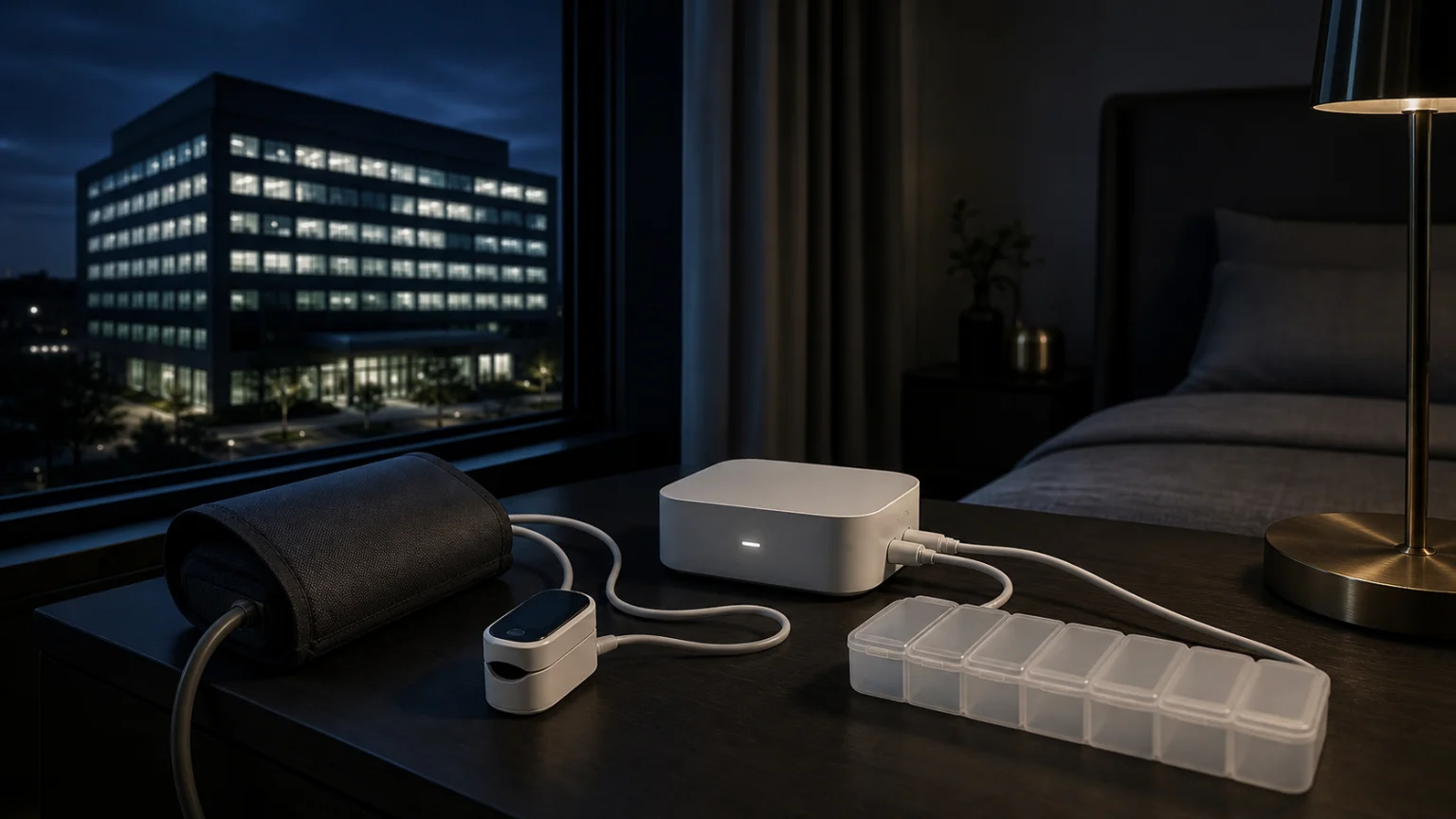
The Community of Madrid, Spain's Health Ministry and Red.es signed an agreement on July 9, 2026 to develop intelligent digital services for the regional public health system. Red.es will contribute €12,821,647, the initial term is four years and it may be extended for another four. The program includes remote monitoring for chronic conditions, telecare, advanced analytics and AI use cases for diagnostic support, early detection and clinical work.
The news establishes funding, objectives and a collaboration framework. It does not yet identify every product, hospital, algorithm, population, protocol or care outcome. That distinction is central in health technology: an agreement, a project, a validated pilot and a stable service are different stages. The useful skill is to locate the stage and ask for the evidence appropriate to it without advancing benefits that remain to be measured.
What is committed and what remains open
The Community of Madrid's official release names several lines: remote follow-up for chronic conditions, tools for rare diseases, telecare, advanced analytics, neurotechnology and AI use cases. It also plans to extend the ÚNICAS network for sharing pediatric clinical information on rare conditions and to join the national medical-image exchange network.
The Health Ministry rounds funding to €12.8 million and says the initiatives will reach 262 public centers and benefit more than 155,000 public-health users each year. These are intended reach and objectives in an issuer announcement. They are not subsequent measurements of people served, earlier diagnoses or journeys avoided.
The regional source adds a relevant mechanism: financed projects, once developed, will be made available to other health administrations through a ministry-managed catalog. Sharing a component may prevent duplication, but it does not remove local adaptation. Health-record integration, permissions, patient populations, professional teams and response pathways differ among centers.
Monitoring alone is not care
A remote service may collect weight, blood pressure, heart rhythm, symptoms or other signals defined for a program. Its value does not come from accumulating data but from connecting a meaningful change to an appropriate care response. Every signal needs a device, frequency, threshold, reviewer, response time and procedure for missing or implausible data.
An alert without a pathway can add workload and anxiety. An overly sensitive threshold creates notices a team cannot manage; an insensitive one misses cases. If a person lacks connectivity, digital skills or a compatible device, the program may widen inequality. Evaluation should therefore include true and false alerts, withdrawal, missing data, professional workload and differences across groups.
Monitoring does not transfer diagnosis to the patient. A system may organize information or prioritize review; accountable professionals still need to make and communicate clinical decisions. The interface should explain what an alert means, what it does not mean and which ordinary or urgent channel applies.
“AI for diagnosis” covers different risks
The agreement places very different tasks under AI: segmenting an image, summarizing a report, estimating risk, ranking a queue or suggesting information. Each function changes the consequence of failure. An administrative error does not carry the same potential harm as a recommendation influencing diagnosis.
The Health Ministry's National Health System AI Strategy brings together guidance for professionals and documents on CE marking and medical-device classification. That separation is a reminder that software described as “for health” does not always have the same regulatory purpose. The declared function, population, context and role in a clinical decision matter.
Before real use, a protocol must specify comparison with current practice, a validation set separate from training, subgroup metrics, oversight, version management and withdrawal. In detection, sensitivity and specificity must be read together and against prevalence in the intended population. A high isolated score does not reveal how many false alarms a clinician will encounter.
Data must retain context and permissions
Exchanging images and information between regions may prevent duplicate tests and support specialist care. It also requires clarity about who accesses data, for which purpose, for how long and with what audit trail. The agreement mentions both care and secondary use of images; research, planning and direct care are not the same data use.
The European Health Data Space Regulation creates a framework for access, exchange and reuse of electronic health data. A specific project must turn that framework into identities, permissions, traceability, quality, minimization and ways to exercise rights. Interoperable does not mean open to everyone.
Context can also disappear. An image needs metadata about acquisition, equipment, timing and related findings. A household reading may depend on how a sensor was used. If an algorithm receives a value without its conditions, apparent digital precision conceals clinical uncertainty.
Four stages that should not be blended
The first stage is funding: budget, accountable parties and term. The second is development: requirements, procurement, integration and technical tests. The third is validation: clinical and operational performance in the intended population, comparison, bias and harm. The fourth is service: trained staff, support, monitoring, patient information and continuous review.
Every headline should use the verb belonging to its stage. “Will fund” is not “has deployed”; “will test” is not “improves”; “may help” is not “detects earlier.” Here, the sources say programs will be developed and implemented during the agreement. They do not publish clinical outcomes from those future programs.
Reuse adds a fifth stage: transfer. Before adopting a component developed elsewhere, an administration must repeat compatibility, data-protection and local-evaluation work. A model may retain technical performance and fail because the workflow, team or population differs.
What every project should publish
A minimum record should name the problem, population, centers and accountable owner; describe inputs and outputs; identify provider and version; fix a comparator and metrics; explain oversight and error response; and publish timeline and status. If a model is involved, it should say when updates occur and whether an update triggers revalidation.
For monitoring, the record also needs alert rates, response time, missing data and unintended consequences. Diagnostic support needs results across relevant groups and counts of false positives and negatives. Telecare needs access, dropout and alternative channels. Success is not installing software in 262 centers; it is showing that the care pathway meets a need without creating greater harm.
Patients and professionals should know when a tool is involved, what it does, who is accountable and how an error can be reported. Human oversight cannot be a generic phrase: it requires time, information and authority to reject a recommendation.
The transferable skill is to place any digital-health announcement at the correct stage. This agreement provides money, timing, responsible institutions and a concrete portfolio; it does not yet provide outcomes for each service. Preserving that boundary allows an investment to be welcomed without turning it into clinical evidence before evidence exists.
Public reporting can follow the same ladder. The first year should show which projects move from requirements to pilots; later reports should identify which complete validation and under what protocol; finally, they should show which enter service and sustain results. Spending or connected-center counts measure activity, not benefit. A single average hides accessibility and workload. A useful dashboard combines process, security, performance, patient and professional experience, and unintended effects. European funding can then be traced from the agreement to a demonstrated improvement or, when none appears, to an explicit decision to revise or stop.
Sources for this piece
This piece draws on 4 primary source(s), gathered during reporting.
This article was produced with artificial intelligence under human editorial oversight.