Nvidia to Invest Up to $100 Billion in OpenAI to Deploy 10 GW
Nvidia will fund AI infrastructure in phases, equivalent to millions of chips. The deal strengthens OpenAI’s capacity while fueling debate over the mutual dependence between the chipmaker and one of its biggest customers.

On September 22, 2025, Nvidia and OpenAI announced a letter of intent to deploy infrastructure and link a potential investment to milestones. The original source supports the documentary core of the event; it was neither a completed payment nor capacity already built.
The first gigawatt is expected to come online in the second half of 2026 and will use Vera Rubin, Nvidia’s next data center platform for artificial intelligence. The companies expect to finalize the partnership’s details in the coming weeks.
An investment tied to deployment
The $100 billion will not arrive all at once. Nvidia plans to invest in OpenAI progressively as each gigawatt comes online, according to the joint announcement. The maximum amount works out to about $10 billion per gigawatt, although the companies have not yet published the full schedule or the financial terms for each tranche. Document supporting the figure.
OpenAI will use the infrastructure to train new models and support everyday use of its products. The company says it already has more than 700 million weekly active users, a scale that makes running models — known as inference — as significant a computing need as training them. Document supporting the figure.
Nvidia will be OpenAI’s preferred strategic partner for computing and networking. The companies will also coordinate their road maps: OpenAI will be able to adapt its software to Nvidia’s future machines, while the chipmaker will design its systems with the workloads of one of its most important customers in mind. The deal is not being presented as exclusive.
Ten gigawatts and four to five million GPUs
The scale becomes easier to understand when the power requirement is translated into equipment. Nvidia CEO Jensen Huang estimated on CNBC that 10 GW would represent between four and five million GPUs, although the final number will depend on the configuration and chip generation used. Document supporting the figure.
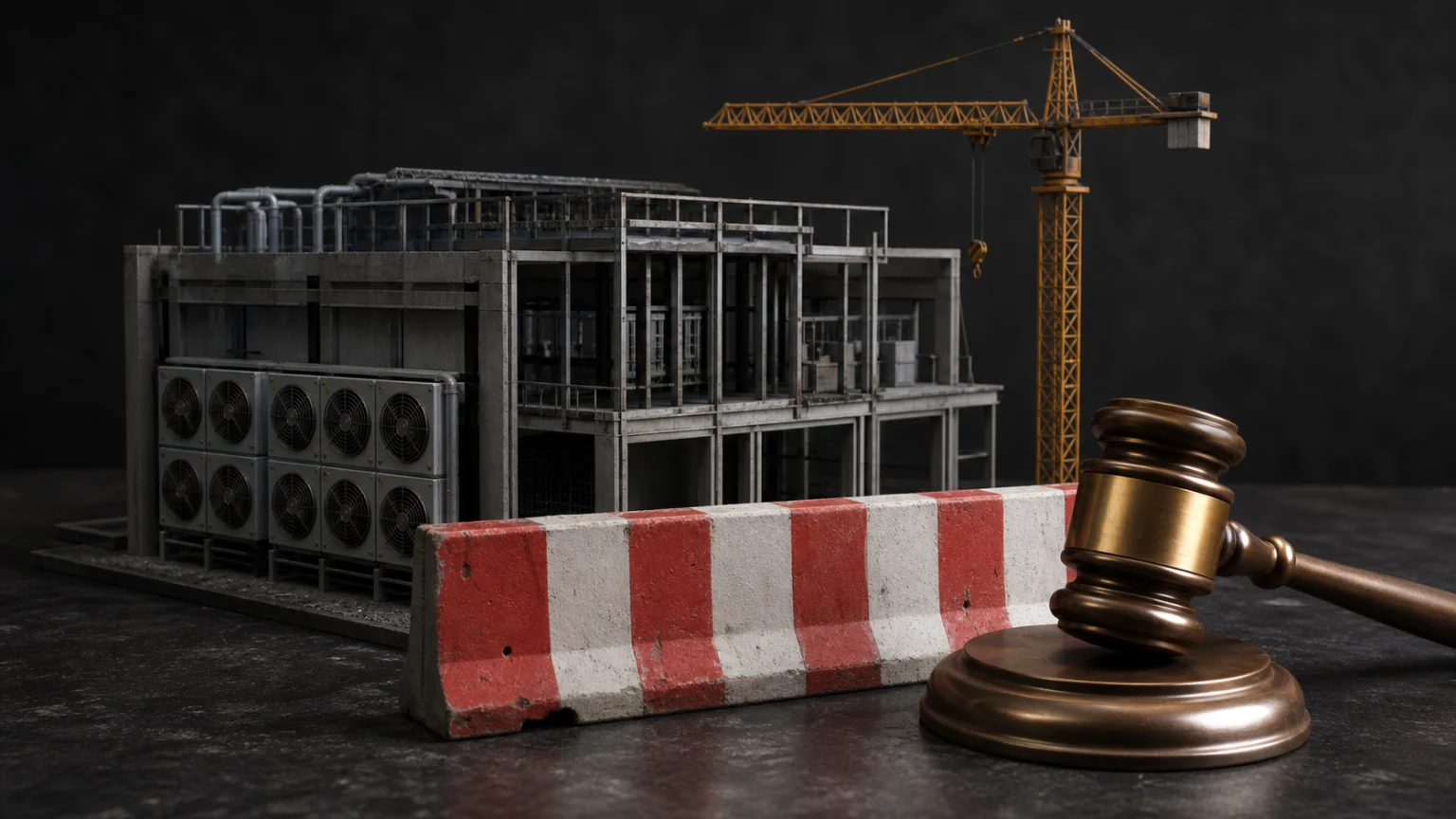
A GPU is the specialized processor that performs much of the computation needed to train and run AI models. The project, however, goes beyond buying chips: it also requires CPUs, high-speed networking, cooling, buildings, connections to the power grid and energy generation.
As a physical benchmark, 10 GW is equivalent to the output of ten one-gigawatt power plants operating simultaneously. That does not mean OpenAI will build a single facility or consume all that capacity from day one. It does show the scale of the industrial challenge: securing land, permits, electrical equipment and energy supplies can be just as decisive as having the GPUs. Document supporting the figure.
The platform selected for the first phase, Vera Rubin, will succeed the Blackwell family. Its use from the second half of 2026 indicates that the deal is designed to span several hardware generations, rather than simply address ChatGPT’s current needs.
The new deal adds to Stargate
The partnership expands an infrastructure race in which OpenAI is already working with Microsoft, Oracle, SoftBank and other partners. In January, OpenAI and SoftBank unveiled Stargate, a project aimed at mobilizing up to $500 billion over four years to build AI data centers in the United States. Document supporting the figure.
The Nvidia agreement complements those plans rather than replacing them. OpenAI needs financing, power and data center operators; Nvidia supplies much of the hardware and networking that connects the processors. Microsoft remains a key technology and investment partner, but OpenAI is diversifying the infrastructure on which it trains and serves its models.
A relationship that also raises questions about demand
The deal has an unusual structure: the leading chip supplier is financing a company that will be one of its biggest buyers. For Nvidia, the investment could secure future demand and deepen reliance on its platform. For OpenAI, it reduces the challenge of funding in advance an expansion whose cost far exceeds that of a conventional venture capital round.
That relationship will fuel debate over circular arrangements in the AI industry. Some of the capital provided by Nvidia will help support a rollout that, in turn, will generate sales of Nvidia systems. That does not invalidate the demand — OpenAI needs more capacity to serve its users — but it does make it necessary to distinguish between customer-funded orders and deals backed directly or indirectly by the supplier itself.
It also concentrates risk. If OpenAI’s revenue growth does not keep pace with spending, if power availability delays the data centers or if model improvements reduce the need for computing, the rollout could proceed more slowly. The tranche-based structure limits some of that exposure: Nvidia only expects to approach the full $100 billion as the gigawatts come online. Document supporting the figure.
The next step will be turning the letter of intent into definitive agreements. Until then, the $100 billion represents a conditional ceiling, not a completed transfer, and the 10 GW is a deployment target whose execution will begin no earlier than the second half of 2026. Document supporting the figure.
Turning the headline into a check
The headline figure becomes meaningful only after naming the instrument. It may be a closed investment, letter of intent, license, minority stake or post-money valuation. Each form answers different questions about when capital moves, which conditions remain and who controls the company. it was neither a completed payment nor capacity already built. The document's verb matters as much as the amount.
A valuation is not a bank account. It follows from the price assigned to part of the equity and may change at the next transaction. Nor does it prove revenue, margin or the ability to fund every announced plan. Read it by recording denominator, timing, attached rights and whether the figure comes from the parties or from people familiar with negotiations.
A useful analysis maps the milestones that turn intent into transfer: signature, approvals, payment, delivery and operation. It then asks what happens if one is missed. That sequence makes it possible to assess how to read conditional capital and energy commitments before treating them as completed facts without assuming the whole headline occurs at once. It also separates maximum exposure from money actually committed.
What the record must preserve
Strategic relationships add dependencies. A license may not convey ownership; a stake may not confer control; hiring a founder does not automatically transfer a former company's knowledge or data. Inventory the actual rights, shared information, exclusivity, duration and exit. The word partnership cannot replace that map.
An evidence sheet separates four columns: what the source claims, what it shows, what it did not measure and what would change the conclusion. That discipline prevents an absence from becoming a promise and a condition from vanishing in summary. It also lets the story be updated without rewriting history from a later outcome.
Include a negative case before deciding. Find a situation where the system, rule, transaction or study does not meet the need and record the signal that would require stopping. Selected successes show that something can happen; the negative case reveals the boundary and lowers the cost of discovering it after deployment.
The skill that outlasts the announcement
A valid comparison preserves denominator and axis. It does not pit a point figure against an average, future capacity against installed capacity or a forecast against an observation. When two sources use similar language, reconstruct what they counted and over what period. If those differ, publish them as different measures instead of inventing a ranking.
The record should survive a version change. Keep URL, consultation date, document, configuration and decision. When new evidence appears, add it with its date and explain what it changes. That traceability prevents opposite errors: keeping an expired conclusion or pretending later information was known on the event date.
The transferable skill in this story is how to read conditional capital and energy commitments before treating them as completed facts. The procedure is short: name the document, preserve the date, fix the axis, find the condition and design a check that can fail. With those steps, a reader need not accept or reject the announcement by intuition; the decision follows a visible chain of evidence.
This article was produced with artificial intelligence under human editorial oversight.