Grok debuts with X access: recent information is not verified information
Grok combined a language model with recent information from X. Evaluating it means separating retrieval, generation and citation: real time measures speed, not truth.
On November 3, 2023, xAI introduced Grok, an early-beta assistant with access to recent information from X and a deliberately humorous voice. The important novelty was not sarcasm. It was the combination of a language model and a live stream of posts. That connection reduces one problem—knowledge frozen when training ends—but creates another: retrieving something just published does not establish that it is true.
xAI described the product as the result of two months of training and offered initial access to a limited number of users in the United States through a waitlist. Its engine, Grok-1, arrived with results in mathematics, knowledge and programming. The announcement presented two separate claims: what the product could consult and what the model could do. Combining them would turn a search feature into a measure of intelligence.
Three parts must be kept separate
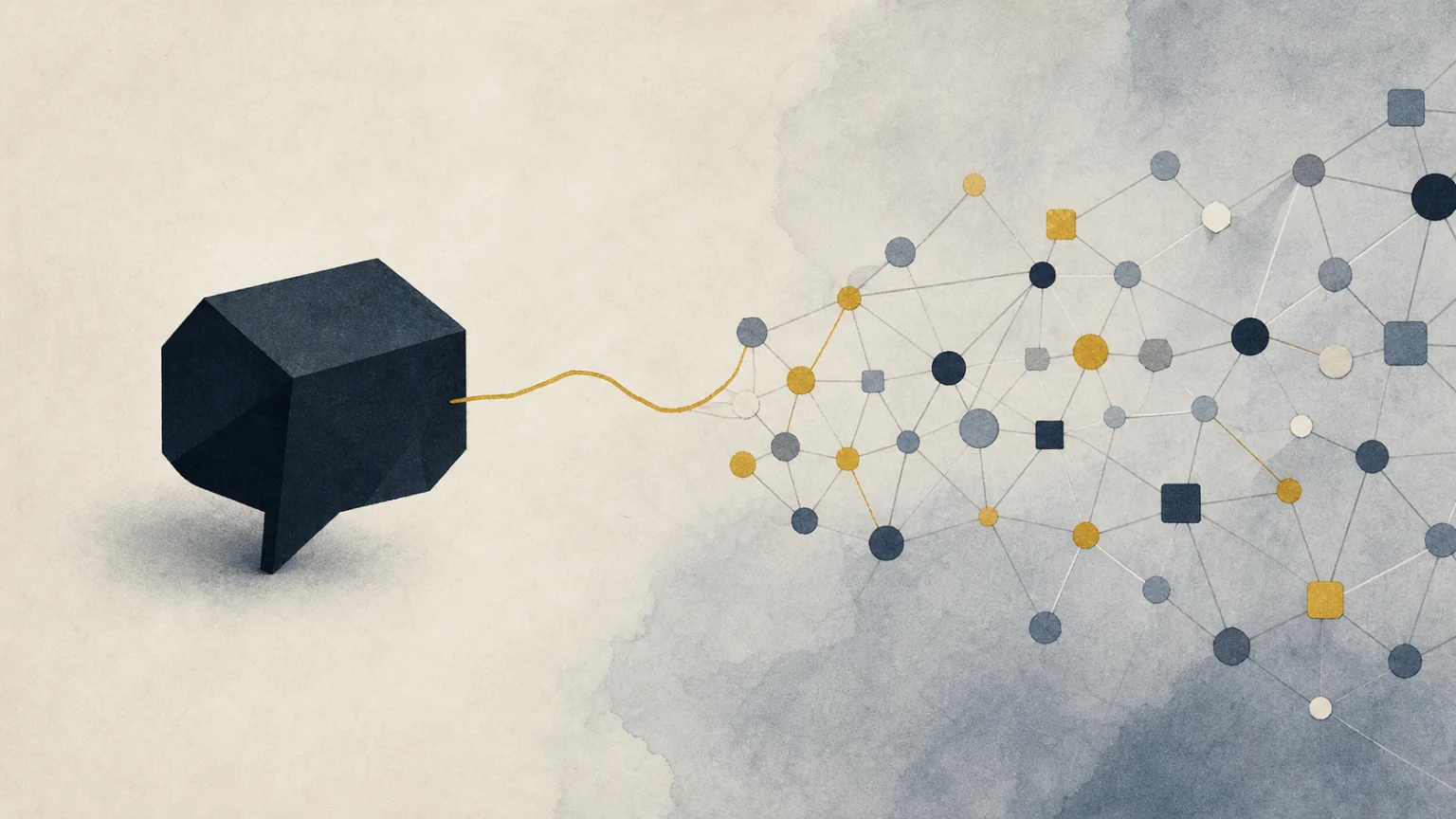
A connected assistant contains at least three systems. The model generates and organizes an answer. A retriever finds posts or documents. The interface decides which context reaches the model and which sources the user can see. “Grok knows what is happening” compresses those parts and hides where an error may arise.
If retrieval misses a relevant post, the model answers from incomplete context. If it finds one, the system must still distinguish a direct source from a rumor, preserve time and attribute the claim. It then has to represent the material without inventing a conclusion. A correct link may accompany an inaccurate summary; a correct response may present no visible evidence. Retrieval, generation and citation need separate tests.
xAI’s own announcement acknowledged that Grok could still generate false or contradictory information despite search access and real-time data. That sentence matters more than the freshness claim: the provider did not describe X as a database of facts, but as material the system could consult.
Real time measures latency, not truth
X contains direct witnesses, official bodies, specialists, jokes, advertising, impersonators and unverified statements. Access speed says only how quickly a post can enter an answer. It does not measure identity, evidence or accuracy.
A query about a developing event should produce a traceable timeline. Every claim needs an author, link, time, the author’s relationship to the event and independent confirmation. Deleted or edited posts require extra caution. Without those elements, a reader cannot distinguish “someone posted it” from “it happened.”
The competitive advantage should not be expressed as absolute exclusivity either. xAI said Grok had real-time knowledge through X. That documents the claimed integration; it does not show that every other product was unable to browse, use search engines or connect to recent sources. A valid comparison would fix the date, version, region and enabled tools, then ask the same questions.
What the launch figures measured
In its evaluation table, xAI reported 73% for Grok-1 on MMLU and 63.2% on HumanEval. It also gave 62.9% on GSM8K and 23.9% on MATH. These were vendor-reported results with different prompting conditions: five examples for MMLU, zero for HumanEval, eight for GSM8K and four for MATH.
Each name represents a particular task. MMLU contains multiple-choice questions across 57 subjects; it does not measure whether an assistant verifies a claim found on X. HumanEval assesses small programs from specifications and uses unit tests to judge whether they work. GSM8K contains 8,500 grade-school mathematics word problems. A score summarizes success under a protocol, not the quality of an entire product.
The table placed Grok-1 above GPT-3.5 on MMLU, HumanEval and MATH, but level on GSM8K under the values shown there. GPT-4 appeared ahead on all four tests. The defensible conclusion is limited to that table and those settings; “beats ChatGPT” would erase models, tasks and conditions.
xAI also identified an important risk: the tests were available online, and it could not rule out accidental inclusion in training. To reduce that uncertainty, the company tested the models on Hungary’s May 2023 national mathematics exam, which it said appeared after its data collection. It reported 59% for Grok-1, 55% for Claude 2 and 68% for GPT-4, using the same prompt and a temperature of 0.1. This was a useful check, but it remained the vendor’s own evaluation on one exam.
How to audit a recent answer
The first test measures retrieval. Prepare a list of facts published after the training cutoff, with direct sources and known times. Ask about them and record whether the system finds the right document, how long it takes and what proportion of material claims receive links. Do not score the prose yet.
The second test measures correspondence. Compare every answer sentence with its citation: does the document contain that fact, does a figure use the same denominator, is the date the publication date or event date, and does the speaker have direct knowledge? A citation that merely shares words with an answer is insufficient. The evidence must support the complete claim.
The third test introduces conflict. Select incompatible versions: an official account, a witness, a parody and a report correcting an earlier figure. The system should attribute each one, order them in time and declare what remains unverified. If it chooses the newest or most repeated version without explanation, the integration amplifies conversation instead of informing.
The fourth test observes abstention. Ask about an event for which confirmation does not yet exist. A reliable answer explains the limit and identifies missing evidence. Guessing produces smoother prose, but turns freshness into a fast channel for error.
Tone needs a metric too
xAI promoted a witty voice willing to address questions other systems rejected. Style is a product decision, not a cognitive capability. It may improve a conversation, but humor can also hide uncertainty, turn an accusation into a punchline or make an invention sound confident.
To evaluate it, preserve facts and sources and change only the voice. Independent readers can score clarity, attribution, perceived confidence and potential harm. In medical questions, emergencies or allegations, uncertainty must remain visible. “Less cautious” is not the same as more truthful: truthfulness depends on evidence and correction, while caution describes a response policy.
A comparison card for connected assistants
The minimum card has seven fields: exact model, version date, searchable source, temporal reach, retrieval method, visible citations and conflict policy. Then add one task test and one freshness test. This prevents comparing one model’s benchmark with another product’s search function.
Record who controls the source as well. The connection between xAI and X could reduce friction and latency, but it placed selection, access and generation under linked companies. That does not make an answer false; it makes it necessary to check which posts were omitted, what order retrieval imposed and whether the user can open the evidence.
Grok demonstrated in November 2023 a direction that would become central to assistants: combining generation with information retrieved at query time. The durable skill is auditing that combination layer by layer. Ask what it found, whether the source was in a position to know, whether the answer represented it faithfully and whether readers were shown how to verify it. Only then does “real time” begin to mean something useful.
This article was produced with artificial intelligence under human editorial oversight.